Under the Threat of Heat- and Stress-Induced Disease: Recognition and Control of Macrophomina in the Field
Why Must We Pay Special Attention to It Due to Drought?
Driven by global climate change and increasingly severe drought periods, field crops are facing escalating environmental pressure. One of the primary beneficiaries of this shift is the pathogen Macrophomina phaseolina (the causal agent of charcoal rot / ashy stem blight). Historically regarded as a tropical disease, the worldwide expansion of warming and arid conditions has turned it into one of the most critical economic threats in arable farming globally.
The fungus specifically attacks host plants (most notably sunflower, corn, and soybean) that are physiologically weakened by drought stress due to water deficits. Consequently, during hot, rainfall-deficient seasons, it can trigger devastating epidemics that result in dramatic yield losses.
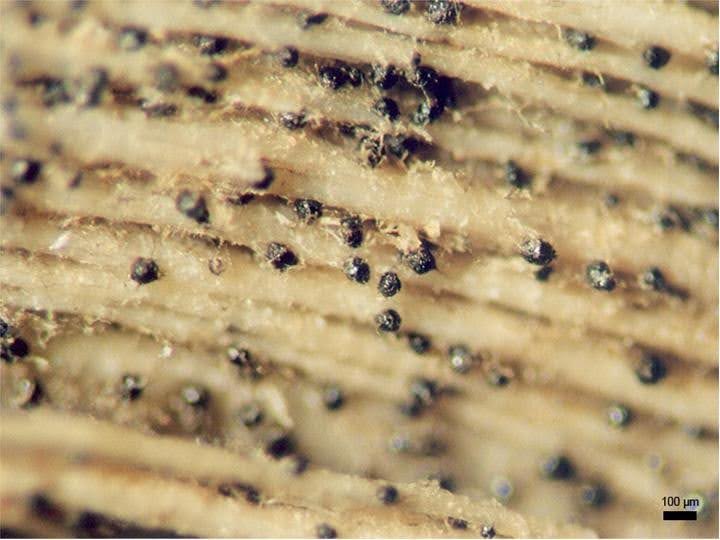
Source: wikipedia commons
One of the characteristic symptoms of Macrophomina infection is the presence of tiny, black microsclerotia.
Challenges in Disease Control
Controlling this pathogen is an extremely difficult and complex task. The fungus is highly polyphagous (boasting several hundred potential host species) and genetically diverse. The root of the problem lies in the fact that the pathogen survives in the soil as microsclerotia for years, while the actual infection and tissue destruction occur covertly within the root system and lower stem.
As a result, traditional foliar fungicide applications during the growing season are virtually ineffective against Macrophomina, as active ingredients cannot reach sufficient concentrations within the lower stem and root tissues.
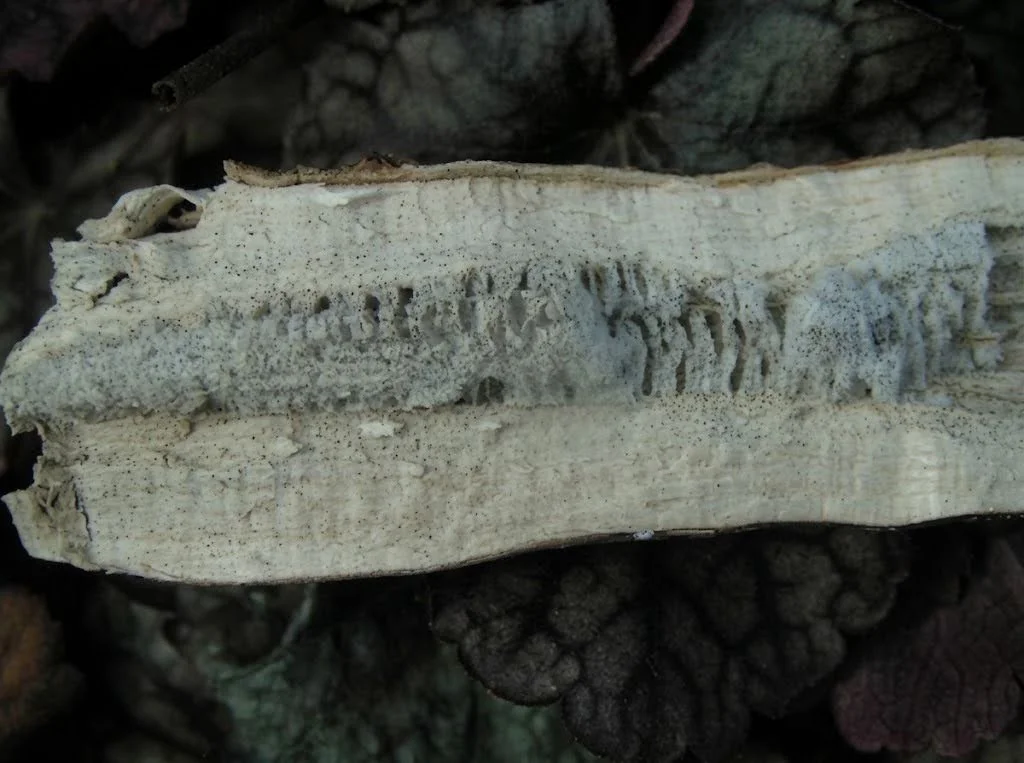
Microsclerotia can be observed within the sunflower’s stem.
Key Symptoms and Diagnostic Challenges
Field diagnosis is often difficult because initial symptoms closely resemble abiotic drought damage, frequently leading to misdiagnosis.
- Sudden Collapse: One of the most characteristic symptoms of infection—particularly in sunflower—is the sudden, overnight wilting and death of the plant, giving the canopy a “scalded” appearance.
- Stunted Development (Forced Ripening): Restricted water and nutrient uptake leads to early wilting, premature drying, and, in sunflowers, significantly reduced head diameter.
- Definitive Diagnostic Hallmark: The only conclusive field evidence of Macrophomina presence is the appearance of tiny, pinhead-sized, ashy grey-to-black microsclerotia inside the stem. Splitting the stem longitudinally reveals these charcoal-like structures (the fungus’s survival organs) clearly embedded within the internal pith tissue, often visible even with a simple hand lens.
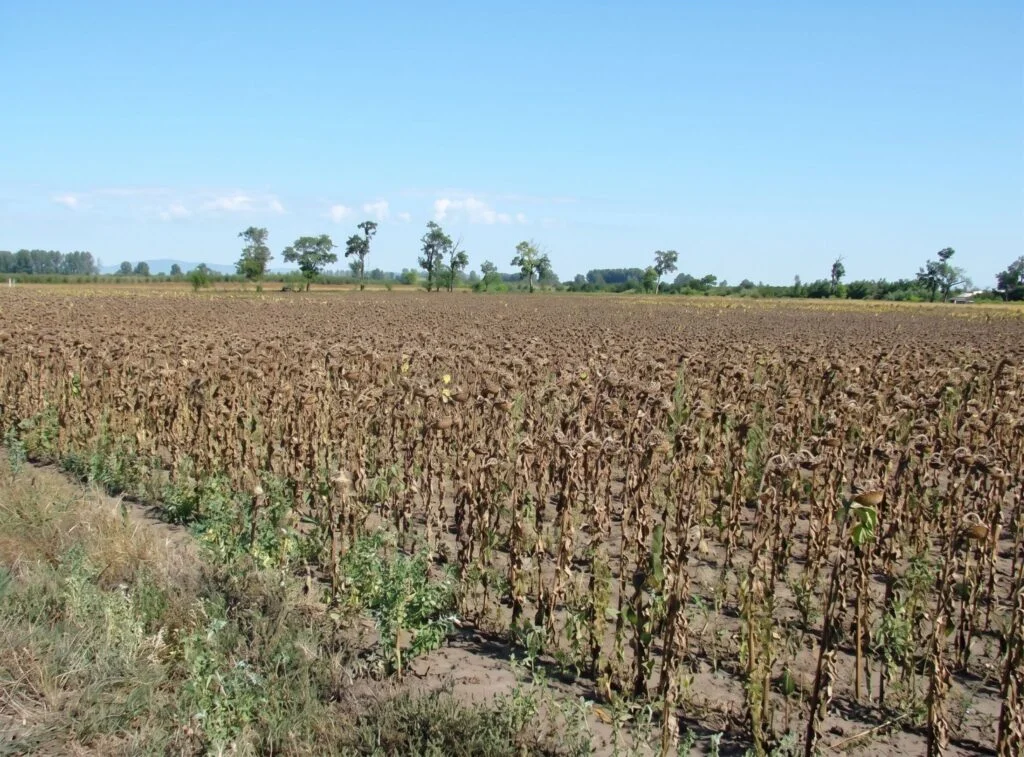
A severe Macrophomina infection in sunflowers produces effects similar to a desiccation treatment.
Principles of Effective Management: Comprehensive Prevention
Since in-season foliar spraying with fungicides is ineffective, disease management relies entirely on prevention, mitigating crop stress, and intelligently combining agronomic and biological practices.
- Drought Stress Mitigation: As a classic “heat- and stress-induced disease,” applying irrigation during flowering and grain/seed filling is the most effective way to prevent symptom expression.
- Biological Control (Trichoderma species): Products based on Trichoderma harzianum or Trichoderma asperellum applied in-furrow at planting represent the most promising direct control tools currently available. These beneficial fungi suppress Macrophomina spread in the rhizosphere and actively parasitize and decompose its survival structures.
- Proper Nutrient Management: Excessive nitrogen fertilization must be avoided (as it softens plant tissues), while adequate potassium and zinc supply must be ensured to enhance drought tolerance and structural integrity.
- Tolerant Cultivars and Hybrids: Selecting hybrids with strong drought tolerance and high resistance/tolerance to Macrophomina is critically important.
- Optimal Plant Density and Sowing Timing: Overly dense crop stands intensify competition for water among plants, increasing stress and, consequently, the risk of infection.
- Crop Rotation and Biofumigation: Although crop rotation alone is insufficient due to the pathogen’s polyphagous nature, incorporating brassica crops (e.g., oilseed radish, mustard) as green manure (biofumigation) inhibits the germination of soilborne microsclerotia.
The Role of Drone Technology
In the fight against Macrophomina, the only viable strategy to avoid yield loss is timely prevention and maximizing plant condition and stress tolerance.
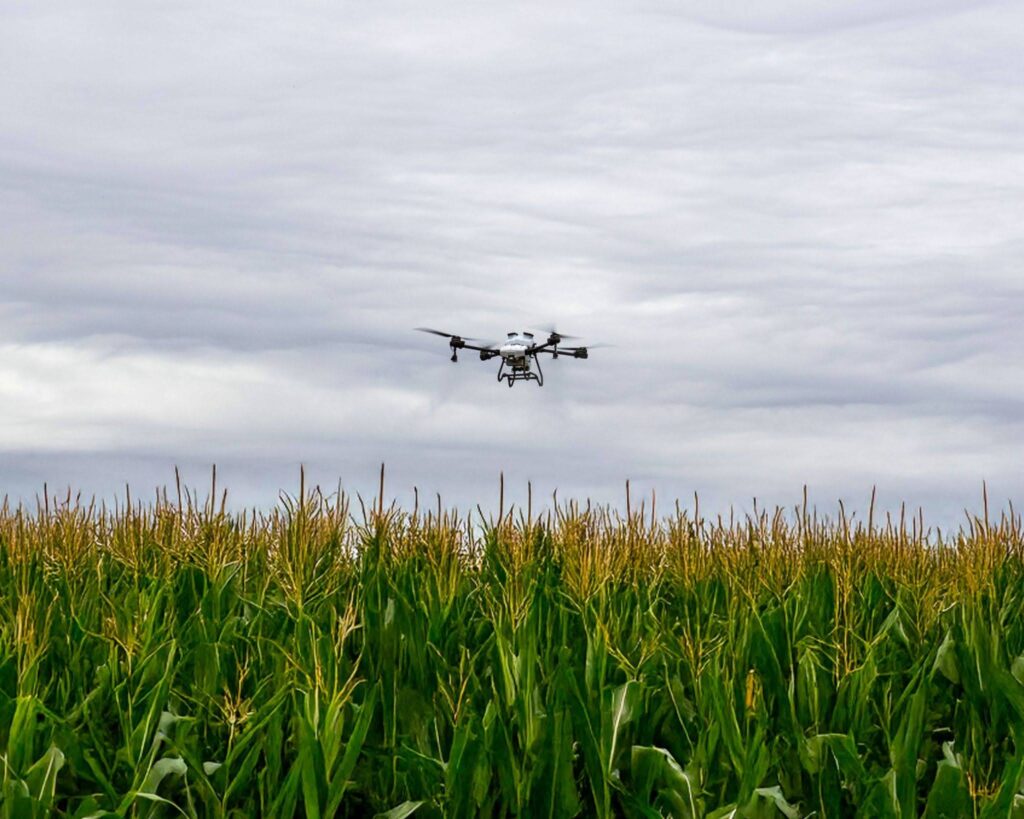
Because the disease attacks plants suffering from drought, the timely, targeted application of biostimulants, amino acids, and foliar fertilizers at the onset of drought is critical. Spray drones play an outstanding role in this strategy. In tall crop canopies (such as mature corn or sunflower), drones allow anti-stress products to be applied quickly, efficiently, and with minimal water usage, without causing wheel tracking or trampling damage. Drone technology enables precise intervention right before the most critical drought days, boosting the plant’s natural defenses before Macrophomina causes irreversible damage.