Spotted Lanternfly – An Invasive Pest Posing a Growing Threat to Europe
Already a Major Problem in North America, Now Emerging in Europe
The Spotted Lanternfly (Lycorma delicatula) is an invasive insect native to Asia that has become a significant plant protection concern in North America over the past decade. It was first detected in Pennsylvania, USA, in 2014. Since then, the species has spread across several eastern states, and its presence was confirmed in Canada in 2026.
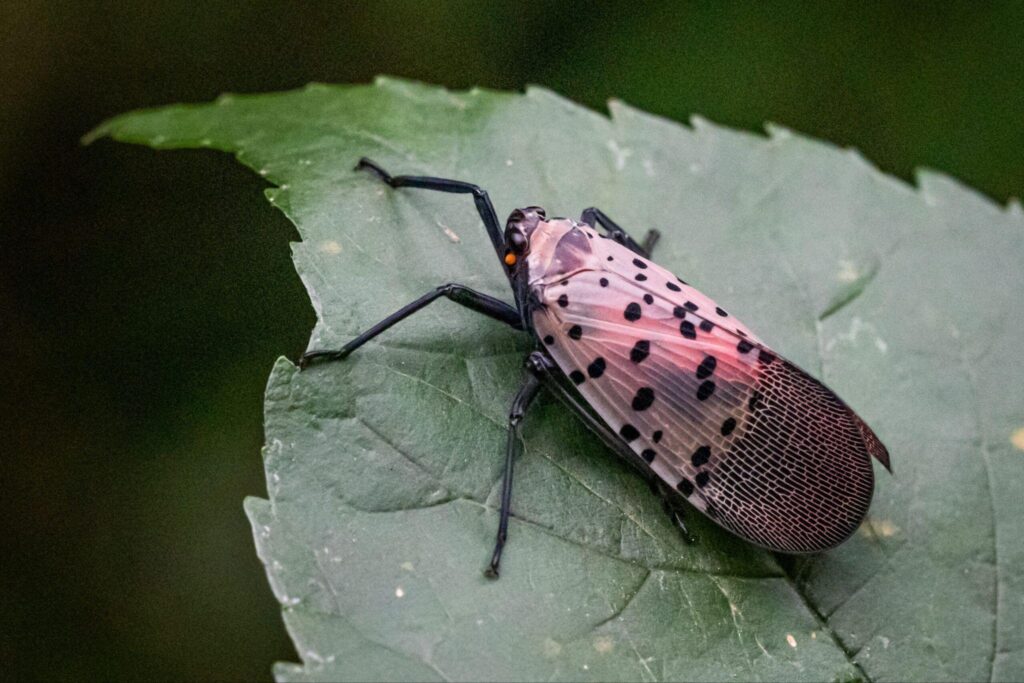
The threat is also becoming increasingly relevant to Europe. In 2026, the first officially reported European detection occurred in Moldova, followed by a detection in Hungary. Although there is not yet evidence of widely established populations across Europe, the species’ arrival represents a genuine phytosanitary risk, as reflected in EPPO reports. Large parts of Europe may offer climatically suitable conditions for its establishment, while many potential host plants—including grapevines—are widely cultivated across the continent.
Biology and Spread
The Spotted Lanternfly uses its piercing-sucking mouthparts to feed on plant sap transported through the phloem of its host plants. It produces one generation per year (it is univoltine) and overwinters in the egg stage, with its egg masses capable of surviving harsh winter conditions. Its life cycle progresses from eggs through four nymphal instars to adulthood. Young nymphs are black with white spots, while fourth-instar nymphs develop a distinctive bright red, black and white pattern.
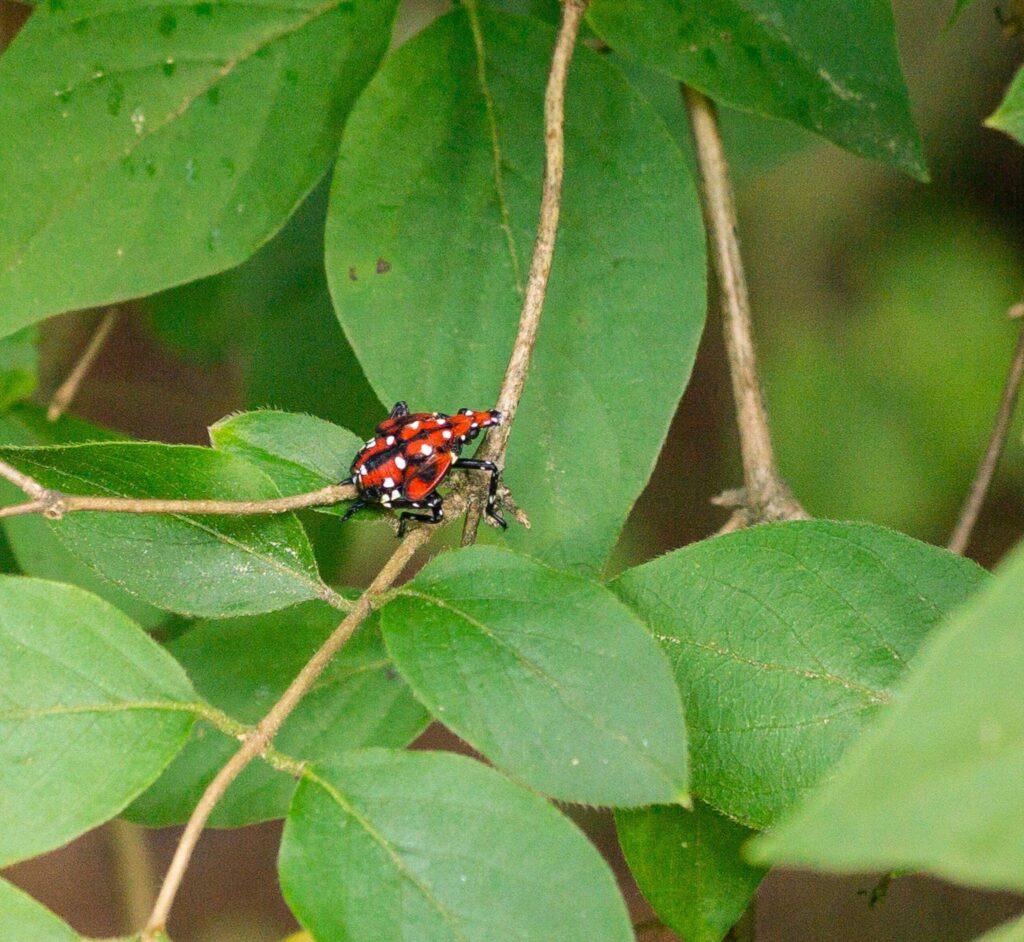
An important factor in the insect’s establishment and survival is the tree of heaven (Ailanthus altissima), another invasive plant species that serves as one of its preferred host plants and an important site for reproduction. Its presence can significantly facilitate the establishment of Spotted Lanternfly populations.
Control is further complicated by the insect’s highly effective passive dispersal. Females lay their egg masses not only on vegetation but also on a wide range of hard surfaces. The egg masses are covered with a grey, mud-like protective coating, making them extremely difficult to detect visually. Vehicles, timber, pallets, agricultural machinery and shipping containers can all act as potential pathways for its spread.
International trade and transport can therefore accelerate its spread far beyond its natural dispersal range. While adult insects can jump and fly over relatively short distances, long-distance movement is largely facilitated by human activities.
Why Is It Particularly Dangerous to Grapevines?
The Spotted Lanternfly can feed on more than 100 plant species, including various trees, fruit trees and ornamental plants. However, grape production faces one of the greatest agricultural risks.
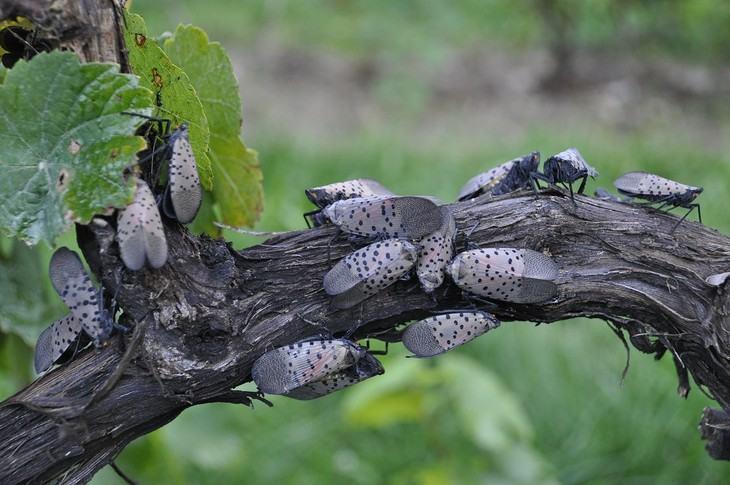
At high population densities, large numbers of insects feed on grapevine sap, placing considerable stress on the plants. They also excrete substantial amounts of honeydew, which promotes the growth of sooty mould. This can further impair photosynthesis and reduce overall plant vigour.
Consequently, the Spotted Lanternfly has already become a tangible crop protection concern for grape growers in the United States. Its potential establishment in Europe is also worrying, particularly given the continent’s extensive wine-growing regions.
Why Is Early Detection Essential?
For invasive pests, early detection is one of the most important elements of effective management. The smaller the population and the more accurately its location can be identified, the easier it may be to implement targeted control measures.
An effective strategy involves several stages:
Monitoring → early detection → localisation → targeted treatment → follow-up assessment
Drone technology can play an important role in this process.
How Can Drone Technology Help?
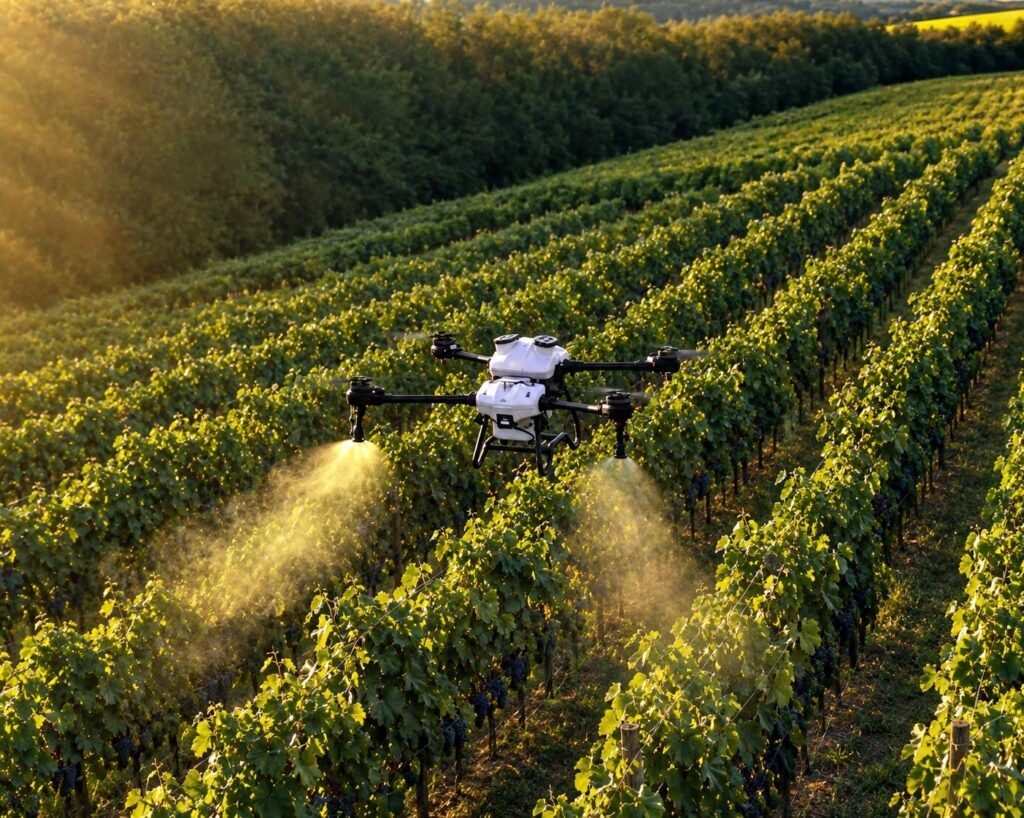
ABZ Innovation’s L-series agricultural drones support rapid, precise crop protection applications. The L30 V2 and L50 can be particularly useful in situations where fast response and targeted application are essential, thanks to their high field capacity, precise navigation and advanced sensing systems.
Drone technology can support the early detection of pest outbreaks, the precise identification of infestation hotspots and targeted crop protection treatments. It can also help avoid crop damage caused by ground machinery and reduce the physical impact of conventional field operations.
The choice of plant protection product, application rate and drone-based application method must always comply with the applicable authorisations and plant protection regulations in each country.
A Growing Crop Protection Challenge for the Years Ahead
The Spotted Lanternfly illustrates how quickly an invasive species originating in Asia can become a global plant health concern. It is already an established pest in North America, its presence expanded into Canada in 2026, and its recent detections have brought Europe into sharper focus.
Although widespread, established populations have not yet been confirmed across multiple EU member states, the large number of potential host plants, suitable climatic conditions in parts of Europe and international transport make early monitoring particularly important.
In the years ahead, early detection, precision mapping and targeted drone-based application may play an increasingly important role in crop protection. In the case of the Spotted Lanternfly, a rapid response is essential—and precision drone technology can offer an additional tool to support these efforts.