
Satellite Navigation Reaches a New Level: Introducing the L5-Compatible Navi Board System
In the world of precision positioning and drone technology, reliable satellite signals form the foundation of all operations. The introduction of the new Navi Board navigation system marks a significant technological advancement. In addition to the previously supported L1 and L2 frequency bands, the system now introduces full support for the third frequency band, L5, drastically enhancing GNSS-based positioning capabilities.
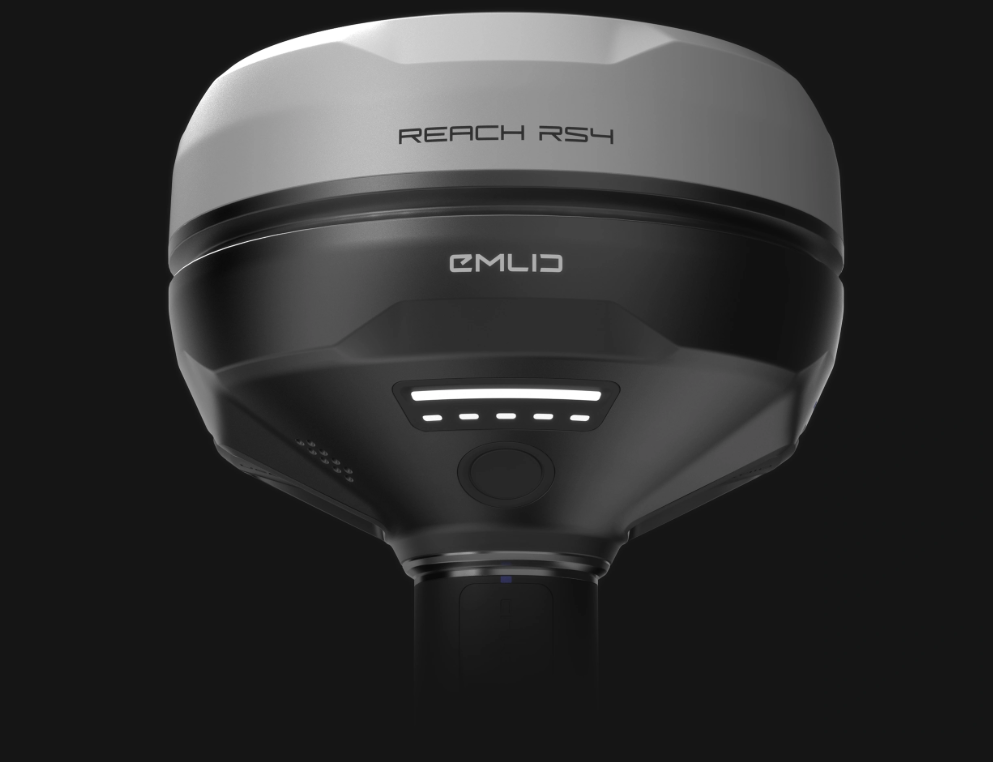
Why Is the L5 Frequency Band a Major Breakthrough?
Satellite positioning systems rely on receivers processing signals from orbiting satellites. The more frequency bands a receiver can simultaneously track and resolve, the more resilient, rapid, and accurate its positioning calculations become.
The key advantage of the L5 frequency band is that it was engineered specifically for challenging operational environments:
- Higher broadcast power and advanced signal structure: Provides superior resistance to radio frequency interference and atmospheric delays.
- Elimination of multipath reflections: Significantly reduces signal errors caused by satellite signals bouncing off walls, tall structures, or dense tree canopies.
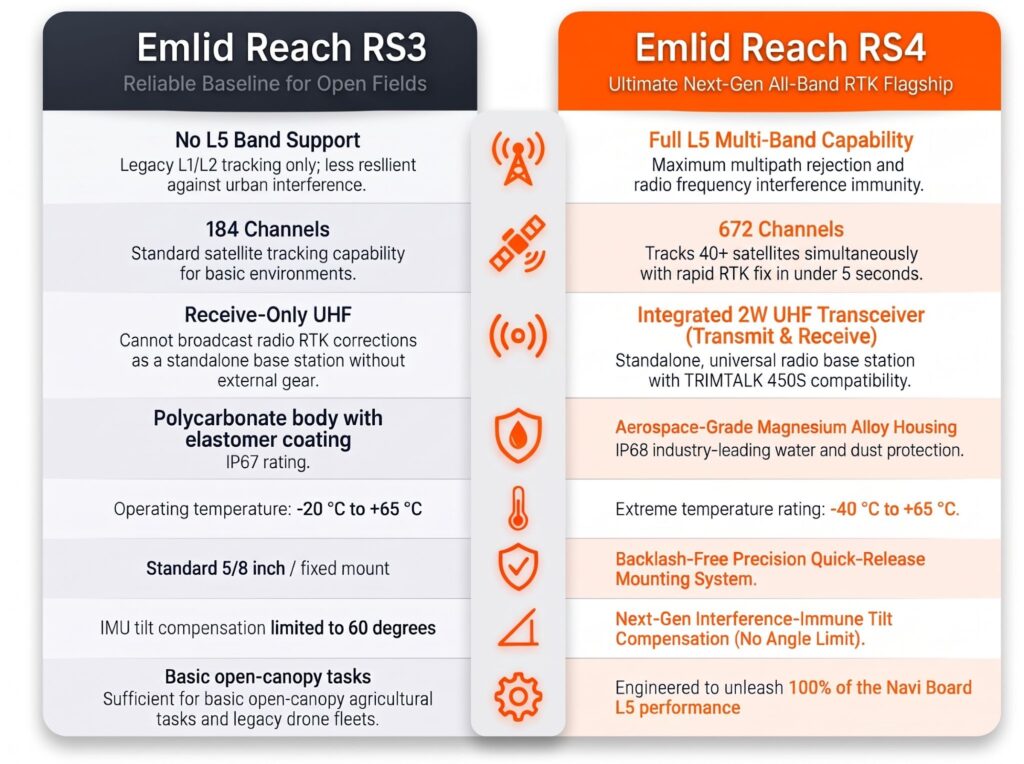
Comprehensive technical and functional comparison for the new L5-compatible Navi Board navigation system
Real-Time Kinematic (RTK) positioning delivers centimeter-level precision, but an RTK rover is fundamentally capped by the capabilities of its base station: a drone cannot apply corrections for frequencies its base cannot track and broadcast.
Decision Guide: Which Model Should You Choose?
Application scope, site complexity, and drone hardware dictate the right hardware choice:
When to Choose the Emlid Reach RS3:
Open-Field Agricultural Applications
In flat, unobstructed fields with an open sky view, legacy L1/L2 bands still deliver reliable RTK performance.
Budget-Constrained Operations
An economical option when advanced L5 multipath filtering is not strictly required.
Legacy Drone Fleets
If your drones do not feature the new Navi Board system, the RS3 remains a dependable workhorse for standard RTK missions.

When the Emlid Reach RS4 is Essential:
Operating Navi Board-Equipped C10, C30, or L-Series Drones
Only the RS4 tracks and transmits the L5 correction streams required to unlock the full potential of next-generation airborne boards.
Challenging Environments & Obstructed Sites
In dense urban corridors, industrial plants, near tall structures, or under tree cover where multipath reflections degrade standard signals.
Autonomous UHF Base Workflows
When operating in remote areas without cellular coverage (NTRIP), where the base station must transmit RTK corrections directly via integrated 2W UHF without external radios.
Harsh Working Environments
For cold operations below -20 °C, rainy environments, or abrasive construction sites where IP68 water/dust proofing and a magnesium alloy body are paramount.
Real-World Field Performance
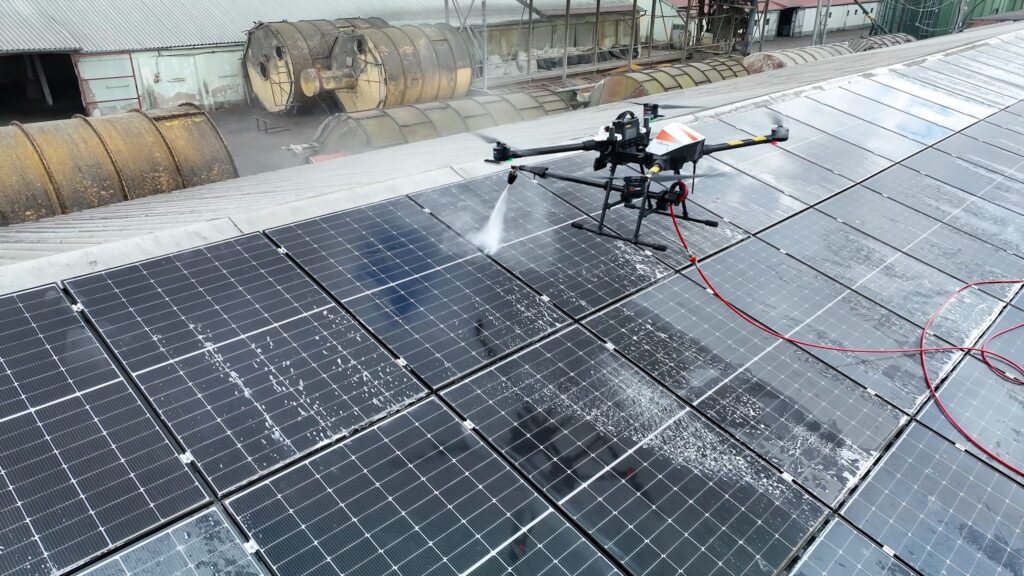
The combination of the Navi Board and the Reach RS4 base station provides an immediate competitive advantage for C-Series (C10, C30) and updated L-Series drone deployments.
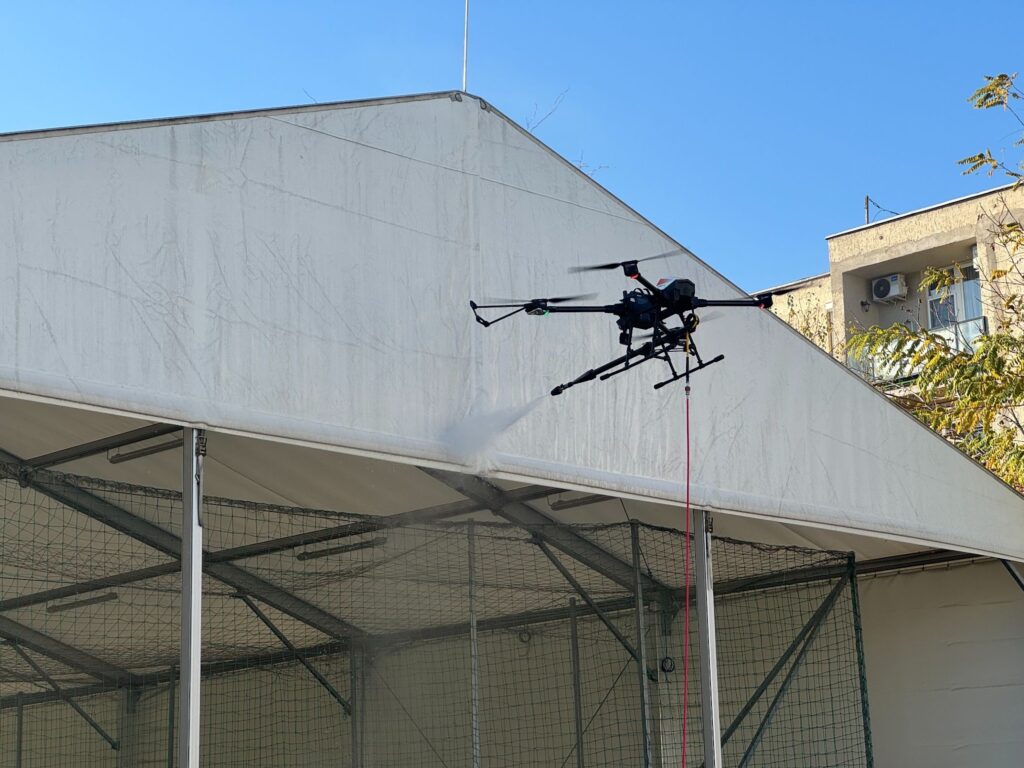
Operating near tall facades, concrete structures, or under dense tree lines frequently causes previous-generation receivers like the RS3 to suffer cycle slips and positioning drift due to missing L5 multi-frequency resilience. By pairing the Navi Board with an Emlid Reach RS4 base station, operators benefit from fully resolved multipath suppression and unshakeable RTK lock across all environments.
Availability
The Navi Board system is designed for use with next-generation C10, C30, and updated L-Series drones. Full L5 performance enhancements are accessible when these drones are deployed alongside an L5-capable base station, such as the Emlid Reach RS4.


