
Grapevine Flavescence Dorée: Symptoms, Diagnostics, and Drone-Based Protection
Grapevine Flavescence Dorée is one of the most relentless quarantine diseases in modern viticulture. At the core of the infection is Candidatus Phytoplasma vitis, a wall-less prokaryotic organism that specifically inhabits the phloem of plants. Because it lacks a classic cell wall, traditional copper fungicides and antibacterial products commonly used in grape production are completely ineffective against it.
Global Threat to Vineyards
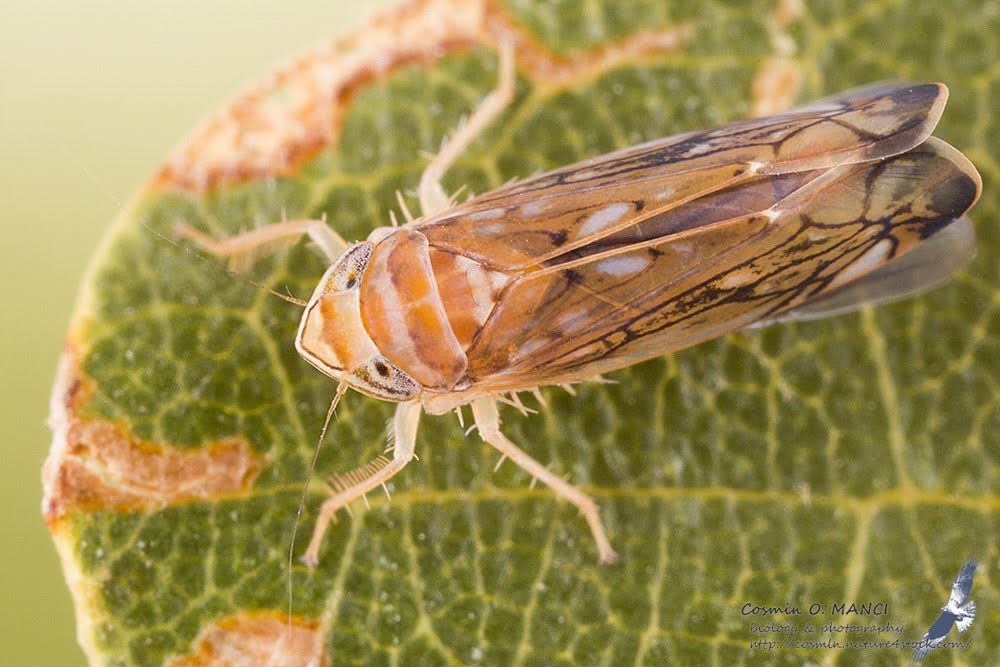
Although the disease triggers its most severe epidemics in Europe, its risk is global in scale. The pathogen’s primary vector, the American grapevine leafhopper (Scaphoideus titanus), originates from North America and spread throughout Europe via the trade of propagating material.
Since European grape varieties (Vitis vinifera) are extremely susceptible to infection, maintaining strict quarantine regulations and monitoring planting materials are of fundamental interest to wine-producing countries worldwide. Furthermore, global warming is accelerating the spread of the vector leafhopper into northern and higher-altitude regions.
Main Symptoms of Infection
The symptoms become particularly striking on the vines in mid-summer and early autumn:
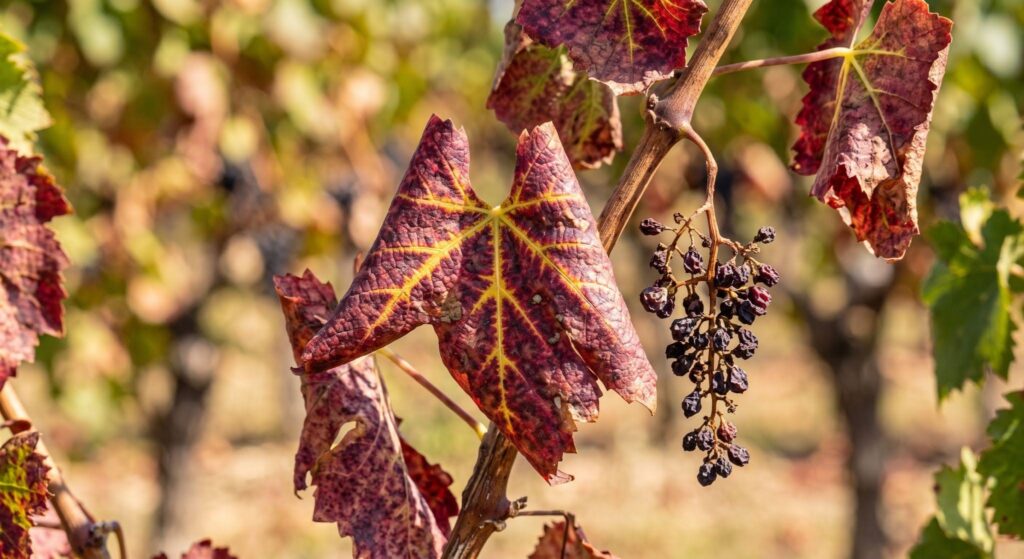
- Discolored leaves: On white grape varieties, the leaves turn golden yellow, while on red grape varieties, they turn dark red or purplish.
- Downward curling and rigidity: The leaf edges curl downward (overlapping like shingles), becoming hard, brittle, and metallic to the touch.
- Incomplete cane ripening: Infected shoots fail to lignify properly, remaining rubbery, pliable, and highly susceptible to winter frost damage.
- Cluster shriveling: Inflorescences or developing berries dry up and clusters deteriorate, leading to drastic yield loss and the gradual decline of the vine.
Biology of the Vector Leafhopper and Critical Timing of Protection (L3–L5)
The success of the plant protection strategy relies on an accurate understanding of the life cycle of the vector, the American grapevine leafhopper (Scaphoideus titanus), and the precise timing of spraying:
- Life cycle: The insect produces one generation per year and overwinter as eggs under the bark of older vines. Larval hatching begins in mid-to-late May, progressing through five nymphal/larval stages (L1–L5) before developing into winged adults.
- Infectivity window: Nymphs in the first two stages (L1–L2) are not yet capable of transmitting the pathogen. The larvae become capable of transmitting the phytoplasma from the L3 stage onwards, after feeding on the vascular tissues of an infected vine.
- Critical spraying timing: Mandatory insecticide treatments must be timed between the L3 and L5 stages (typically between mid-June and early July). The goal is to eradicate the nymphs before they reach the adult stage and take flight to spread to neighboring vineyards.
Precision Protection with Drone Technology: ABZ Innovation L Series
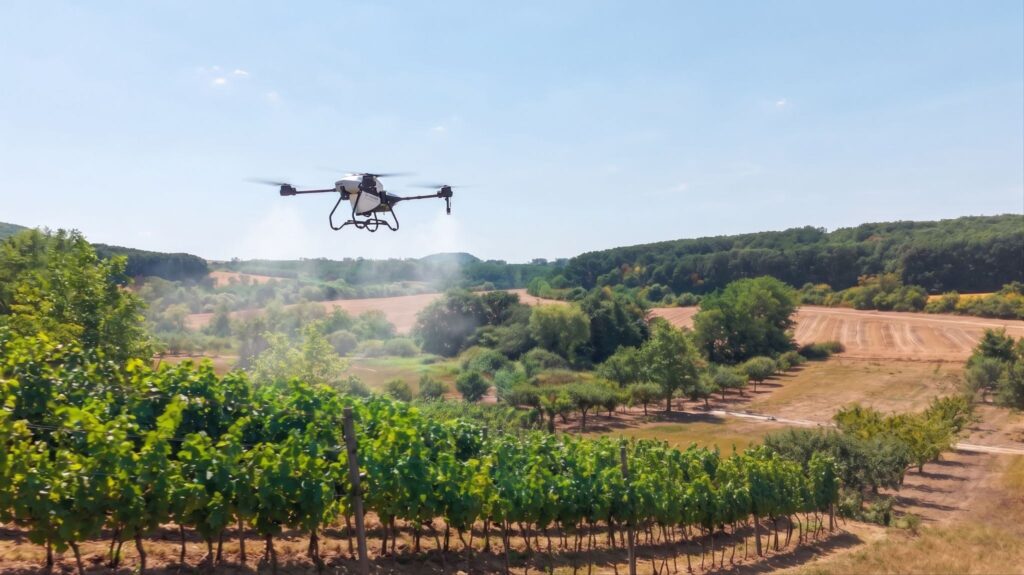
In controlling the American grapevine leafhopper, the combination of regular monitoring (yellow sticky traps), laboratory diagnostics, the removal of infected plant parts, and precision drone intervention represents the most effective approach in modern viticulture.


