The problem
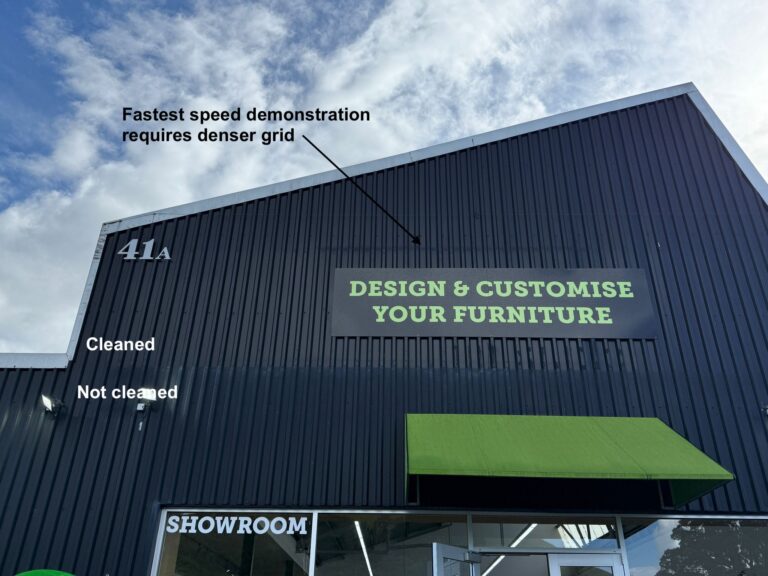
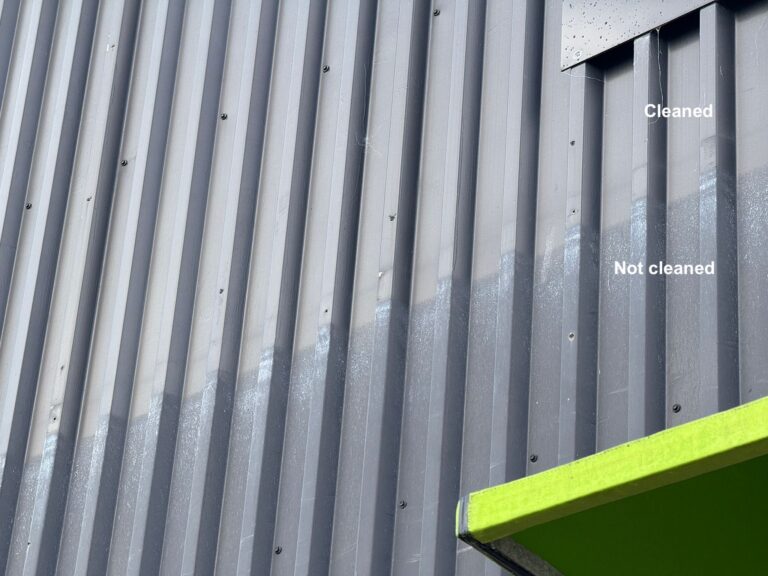
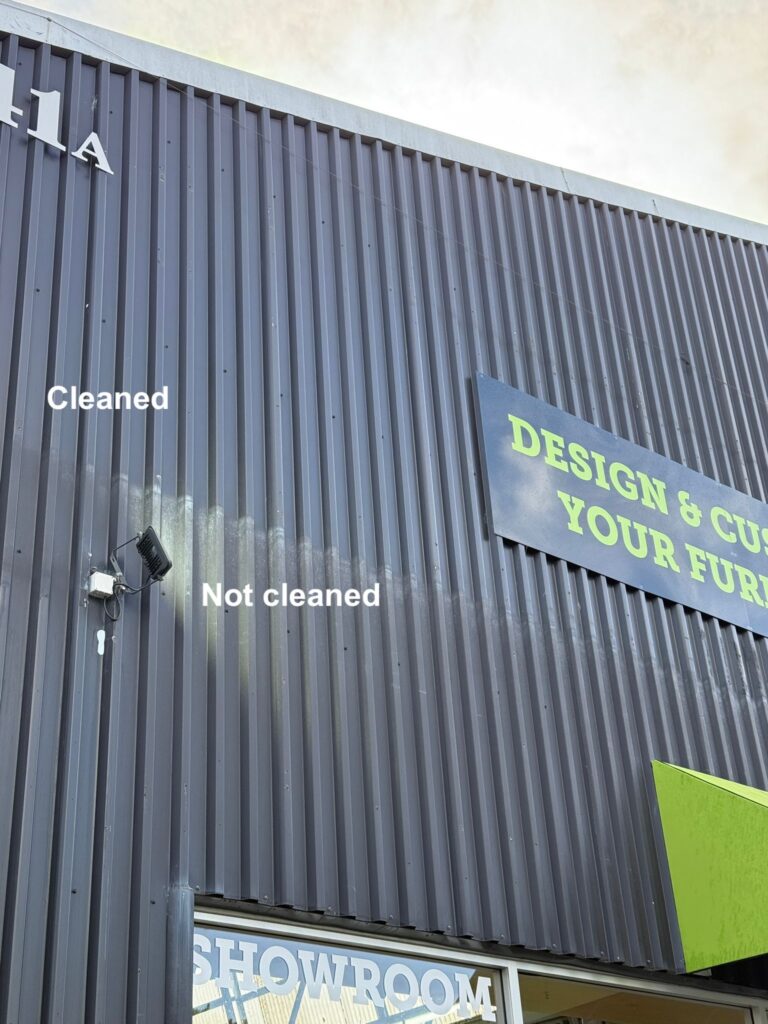
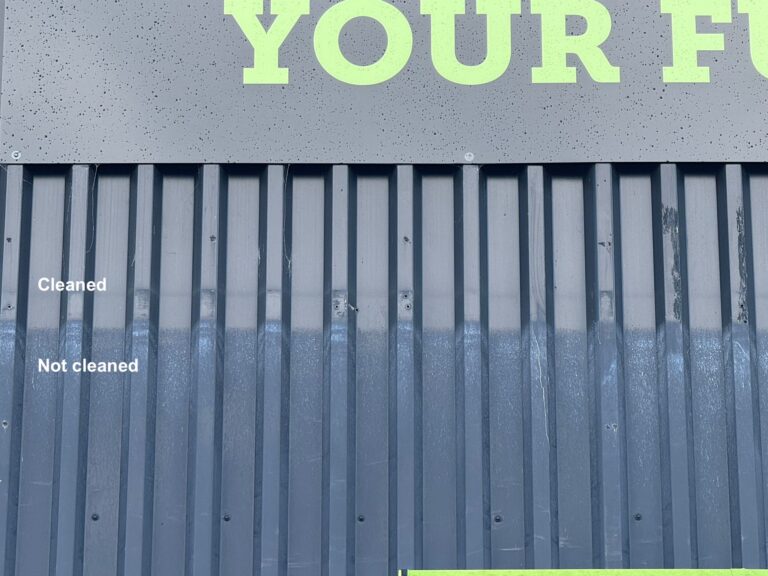
The subject is a building facade requiring exterior cleaning. According to the owner, the surface had not been cleaned for years. As a result, visible environmental contamination had accumulated across the facade. The total demonstration area measured approximately 15 m × 2 m. The goal of the demonstration was to evaluate cleaning efficiency, setup time, and power consumption using the ABZ C10 and an attached pressure washing system.
Common solutions
Traditional facade cleaning typically involves scaffolding or boom lifts, both of which require significant setup time and increase operational costs. Manual cleaning from ground level using telescopic poles is possible but slow and physically demanding. These methods often result in extended downtime and higher labor requirements, making them less suitable for quick demonstrations or small-to-medium cleaning tasks.
The solution provided
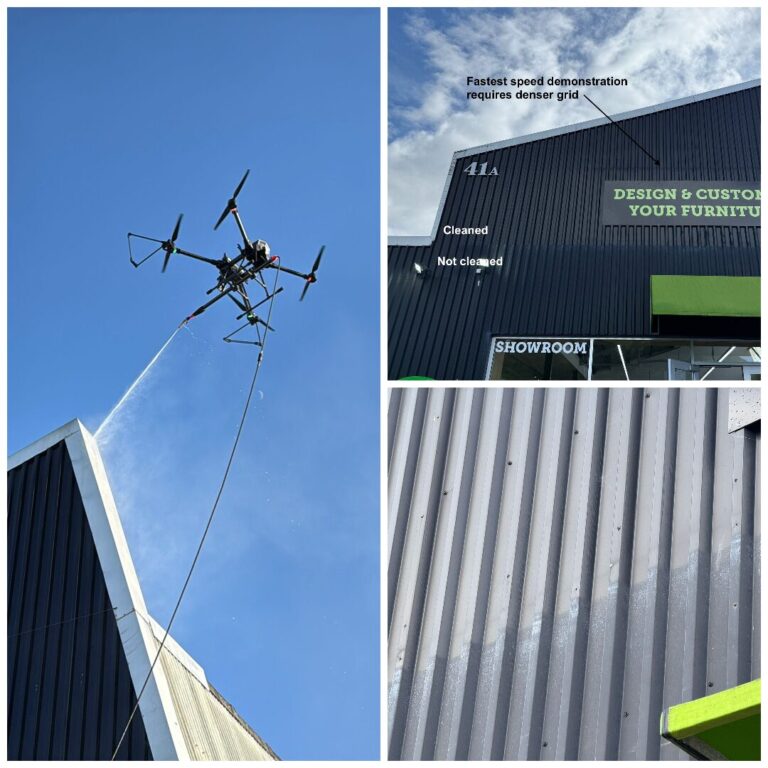
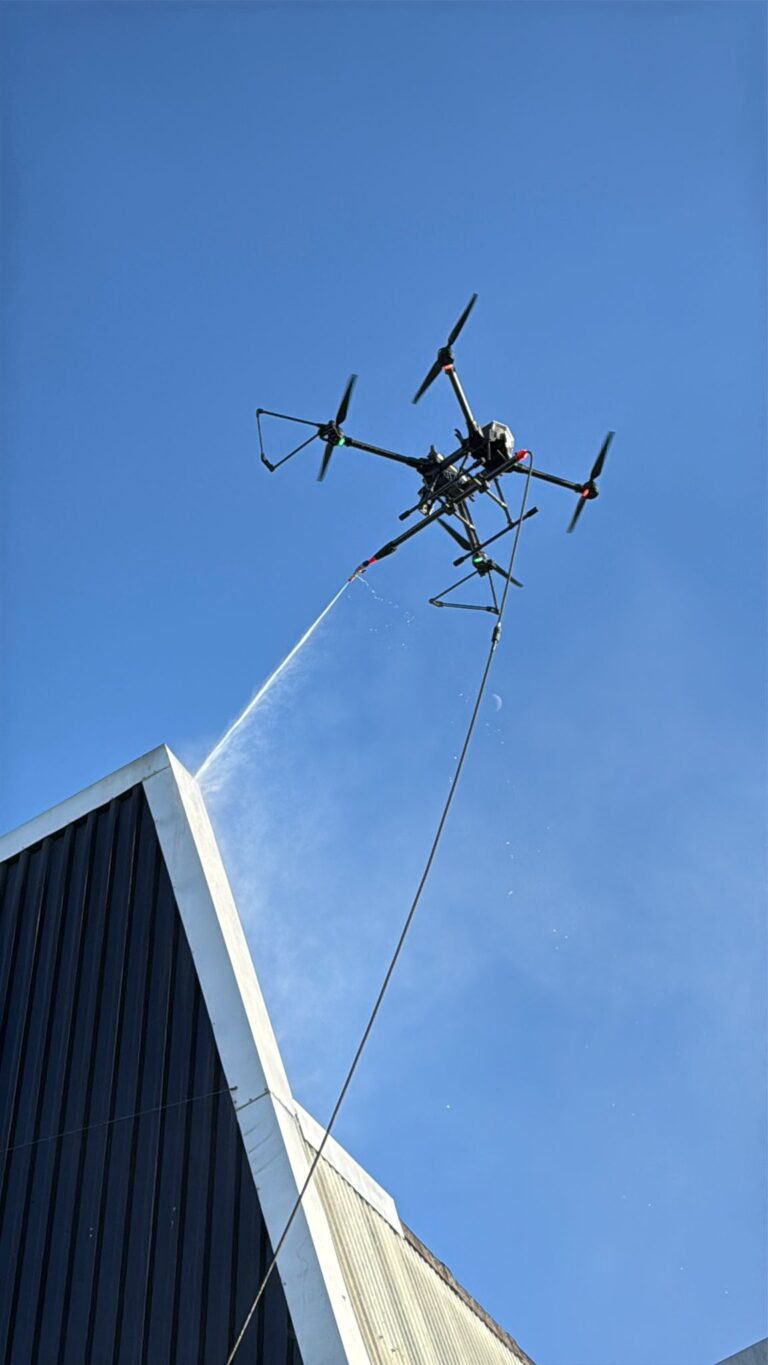
The facade was cleaned using a battery-powered pressure washing system, allowing for rapid deployment and efficient operation. The complete setup process took approximately 15 minutes, including equipment preparation and initial testing.
During the demonstration, a 15 m × 2 m facade surface was cleaned using approximately 40% of a single battery charge. The effective cleaning (air) time was 10 minutes, highlighting the system’s efficiency for short-duration tasks.
Water was supplied via a standard hose connection, and pressure washing was carried out using a controlled, even spray pattern to ensure consistent coverage across the surface. The system provided sufficient pressure to remove surface contamination without the need for chemical agents. The ground unit was a petrol 3100 PSI commercial pressure washing system.
Results
Cleaned area: 30 square meters
Active cleaning time: 10 minutes
Setup time: approx. 15 minutes
Battery consumption: ~40% (of 1 battery)
Cleaning method: battery-powered pressure washing at 3000 PSI
Chemicals used: 0 liters
This demonstration showed that the system is well-suited for rapid facade cleaning tasks, offering a practical alternative to conventional methods while significantly reducing setup time and operational complexity.