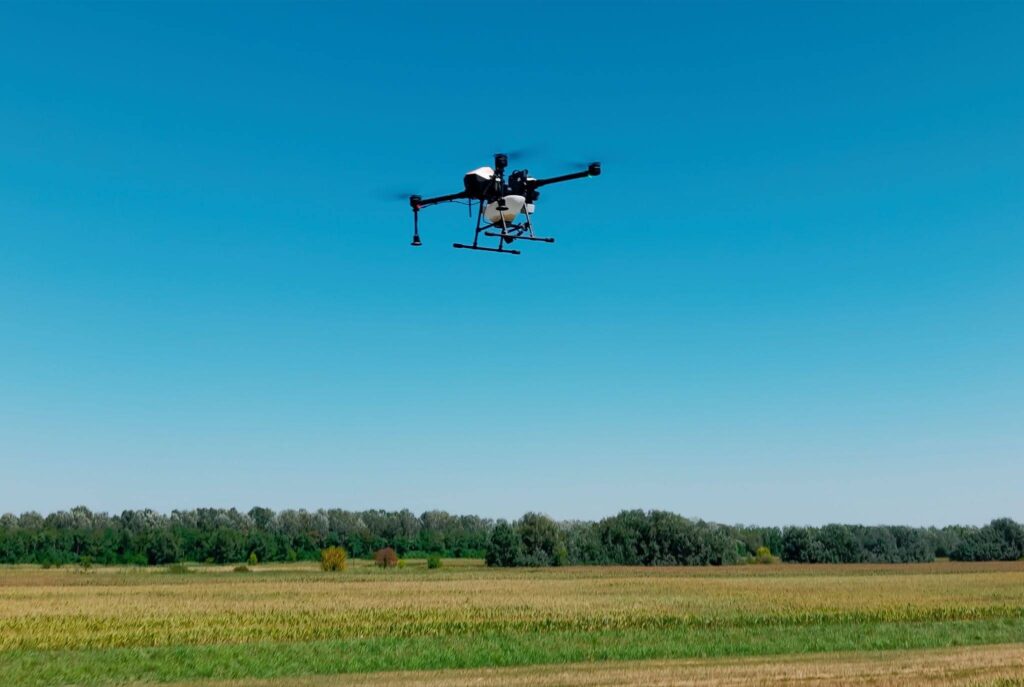
Fall Armyworm – A New Challenge for Crop Protection and Drone Technology
In recent years, the spread of a highly destructive agricultural pest has accelerated worldwide, turning what was once primarily a regional problem into a major international crop protection challenge. The fall armyworm (Spodoptera frugiperda) is native to the Americas, but has spread across large parts of Africa, Asia and Oceania and is now receiving increasing attention in Europe as well.
Its spread is particularly concerning because the pest is highly mobile, reproduces rapidly and can damage a wide range of crops. Maize is one of its most important hosts, but fall armyworm can also affect rice, sorghum and numerous other crops.
For modern crop protection, the key question is therefore not simply how to eliminate the pest once an infestation has become severe, but how to detect it early and intervene at the right developmental stage.
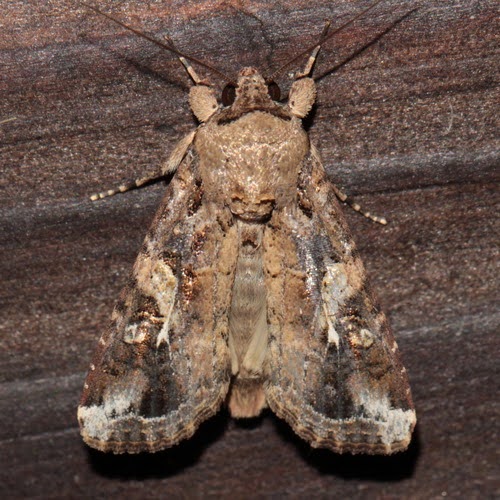
Photo: https://www.inaturalist.org/photos/160344068
The larvae cause the damage
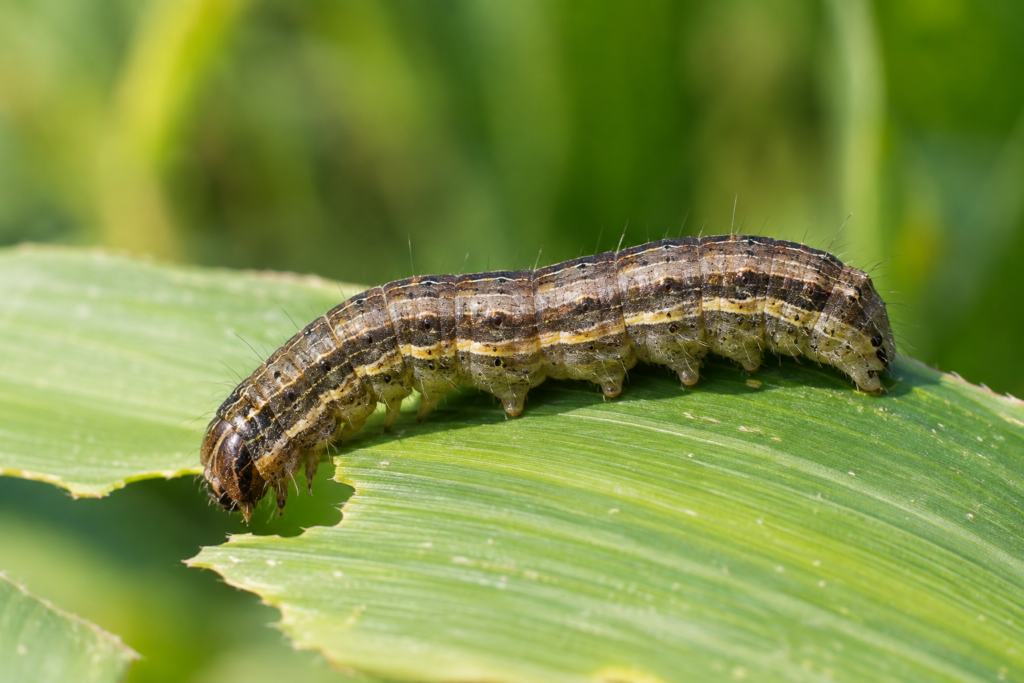
The most important damaging stage of Spodoptera frugiperda is the larval stage. Young larvae initially feed on leaves before moving into more protected parts of the plant, particularly the maize whorl.
As feeding intensifies, the damaged leaf area increases and the plant’s photosynthetic capacity can be reduced. Heavy infestations can interfere with plant development and, depending on crop stage and infestation severity, may ultimately result in significant yield losses.
This makes timing a critical element of fall armyworm management.
Once larger larvae have developed and moved deeper into the plant canopy or whorl, achieving effective control can become more difficult. Early detection and timely intervention are therefore essential components of an integrated crop protection strategy.
Control can begin before the larvae appear
An important characteristic of fall armyworm management is that intervention does not necessarily have to begin when visible larval damage is already present.
Biological control can target the pest at an earlier stage. Trichogramma species, for example, are tiny parasitoid wasps that attack fall armyworm eggs rather than the larvae themselves. By parasitising the eggs, they interrupt pest development before caterpillars emerge and begin feeding on the crop.
Other natural enemies, including Telenomus remus, can also contribute to integrated fall armyworm management. The appropriate biological control strategy depends on the pest population, developmental stage, crop, environmental conditions and the biological agent being used.
This is why monitoring and timing are just as important in biological control as they are in conventional crop protection.
Drones open new possibilities for biological control
One of the practical challenges of biological crop protection is the rapid and uniform distribution of biological agents over large agricultural areas.
This is where agricultural drones can provide an additional tool.
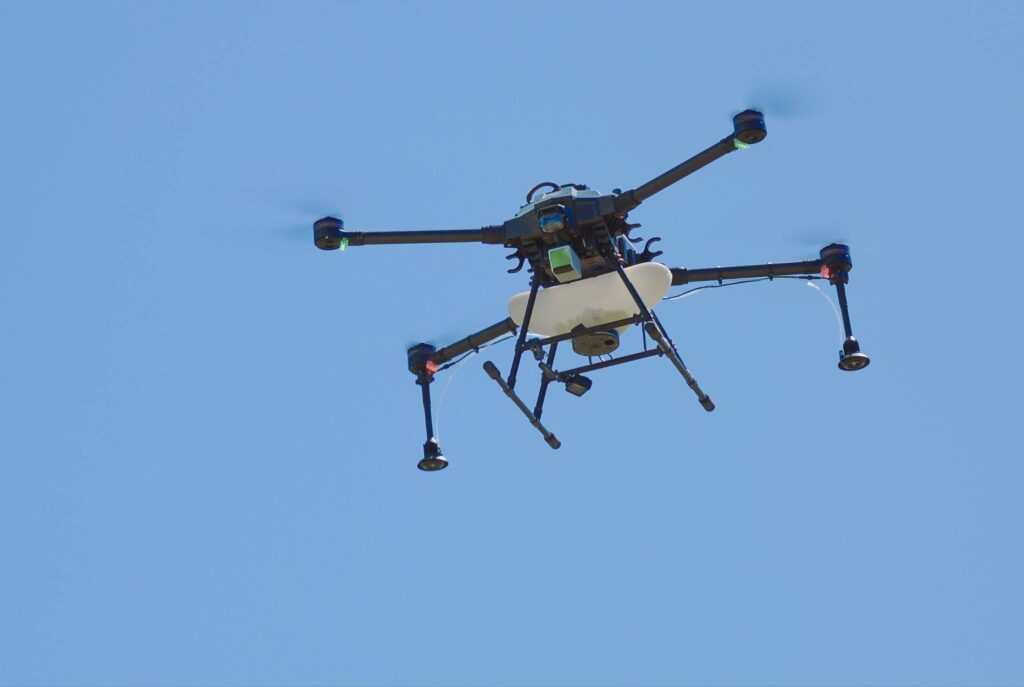
The ABZ Innovation L10 V2, for example, is compatible with a dedicated Trichogramma spreading system. This creates an opportunity to use drone technology for the targeted distribution of egg parasitoids when monitoring indicates that the timing is appropriate.
The advantage is not simply that the application is performed from the air. More importantly, drone technology can help make timely intervention over large areas more practical, while avoiding the need for conventional ground machinery to travel through the entire crop. In a pest such as fall armyworm, where the effectiveness of biological control depends strongly on timing, this can be an important part of an integrated approach.
When larvae are present: precision spraying
Biological control will not always be sufficient on its own.
When monitoring indicates that a significant larval population has developed, conventional insecticide treatment may also be required. At this point, the objective is not simply to apply a crop protection product quickly, but to achieve effective treatment of the target pest while considering the crop’s development and the location of the larvae.
Young fall armyworm larvae can remain within the maize whorl, which makes application quality particularly important. Spray coverage, droplet characteristics, flight parameters and the ability to reach the target area can all influence treatment performance.
Agricultural drones can support this type of targeted application. ABZ Innovation’s spraying systems allow application parameters to be adjusted to the specific task, while the aircraft’s LiDAR-based systems support controlled flight and altitude management.
For smaller and more targeted applications, the L10 V2 can provide a compact spraying platform, while the larger-capacity L30 V2 and L50 can support higher-volume operations over larger areas. The technical choice, however, should always follow the crop protection objective rather than the other way around.
As with all pesticide applications, only products and application methods authorised for the relevant crop and use in the respective country should be used, together with all applicable label requirements and regulations.
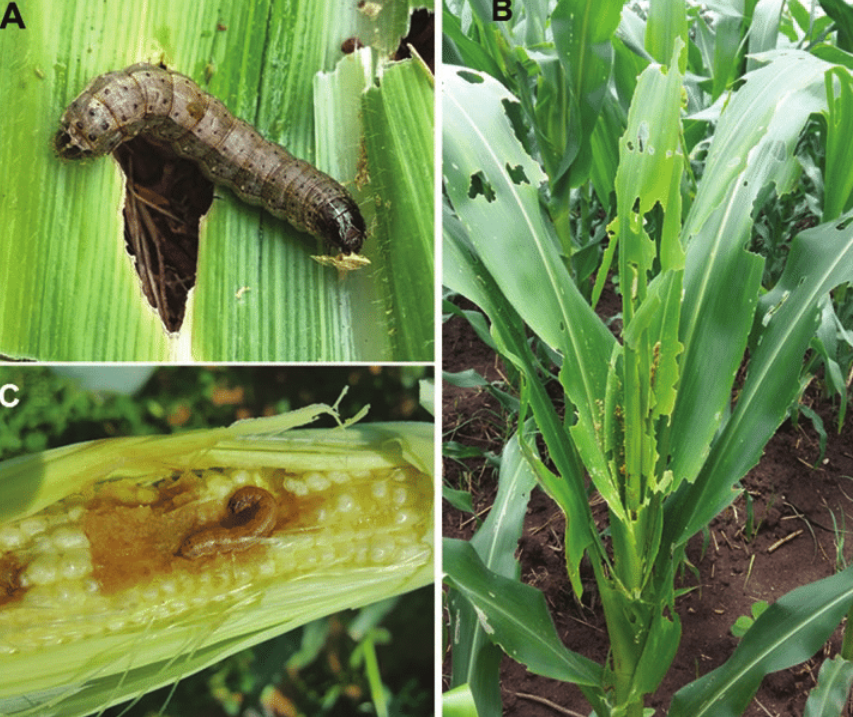
Photo:https://www.researchgate.net/figure/A-Spodoptera-frugiperda-larvae-5th-instar-with-examples-of-leaf-feeding-B-and_fig2_344935312
From emergency treatment to integrated pest management
The fall armyworm illustrates an important change in modern crop protection.
The goal is increasingly not to wait until extensive damage has already appeared. Instead, the focus is shifting towards monitoring the crop, identifying the pest as early as possible, determining its developmental stage and selecting the most appropriate intervention.
Depending on the situation, this may mean biological control at the egg stage, conventional insecticide treatment against larvae, or a combination of several measures within an integrated pest management programme.
Drone technology can support these different approaches.
It can provide a platform for the targeted application of crop protection products and, with the appropriate configuration, for the distribution of biological control agents such as Trichogramma. This makes the drone more than simply an alternative spraying machine: it can become part of a broader precision crop protection system in which timing, location and treatment method are matched to the actual pest situation.
The emergence and spread of fall armyworm demonstrate why this approach is becoming increasingly important. The question is no longer simply how to control the pest after it has established itself in a field.