
Greenhouse Shading and Paint Removal with Spraying Drones
In modern greenhouse production, managing light and temperature is essential for maintaining healthy crops and consistent yields. Seasonal treatment of greenhouse roofs and plastic surfaces plays an important role in this process.
During the brighter months, greenhouse shading paint or coating can be applied to reduce excessive solar radiation and heat buildup. When the season changes and natural light becomes more limited, the same spraying drone can be used to apply a suitable cleaning agent and wash the shading coating off the greenhouse surface.
This makes spraying drones a practical solution for both sides of the seasonal cycle — from applying greenhouse shading paint to removing it again.
The Role of Seasonal Greenhouse Surface Treatment
Greenhouse climate management involves two main phases within an annual cycle, adapting to changes in natural light availability and outdoor temperatures.
Spring Shading: Protecting Crops from Excessive Solar Radiation
As spring progresses into summer, solar radiation intensity and the number of sunshine hours increase significantly.
- Reducing internal temperatures: Shading coatings applied to greenhouse surfaces reflect a proportion of incoming solar radiation, helping to reduce heat buildup inside the greenhouse. Depending on the coating, weather conditions, greenhouse design, and application rate, internal temperatures may be reduced by as much as 5–10°C.
- Preventing crop scorching: The coating diffuses direct sunlight, allowing light to penetrate more evenly into the crop canopy, including the lower leaves. This helps reduce the risk of leaf and fruit scorch, as well as excessive evaporative stress.
Autumn Cleaning: Washing the Shading Coating Off
As days become shorter and natural light availability decreases, the seasonal shading coating is no longer required. This is where spraying drones offer another useful application: the drone can be used to apply a suitable shading-removal agent across the greenhouse roof, helping loosen and wash away the existing coating.
- Application of a shading-removal agent: A specially formulated cleaning agent is applied to dissolve and remove the existing shading coating effectively, helping to minimise residual deposits.
- Optimising light transmission: Following cleaning, the greenhouse glazing can recover its original light-transmission properties, ensuring that crops receive as much natural light as possible during the lower-light conditions of autumn and winter.
Why Use a Spraying Drone for Greenhouse Paint Removal?
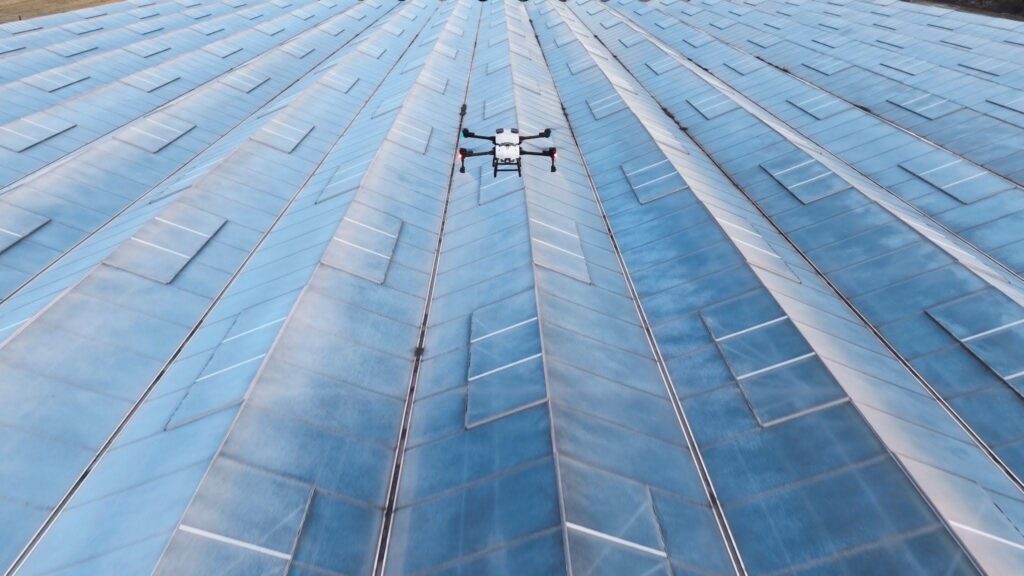
Treating elevated surfaces has traditionally required manual work or specialised machinery, both of which can involve physical strain and occupational safety risks.
The use of agricultural spraying drones offers several technological advantages for greenhouse surface treatment:
- Worker Safety and Structural Protection: Drone-based operations eliminate the need for personnel to walk on greenhouse roof structures, significantly reducing the associated risk of accidents. They also avoid placing the direct physical load of workers or machinery on fragile glass or plastic film surfaces.
- Speed and Operational Efficiency: Aerial application can significantly reduce the time required for surface treatment, enabling large greenhouse complexes to be treated or cleaned more efficiently.
- Uniform Spray Coverage: Automated flight paths and adjustable droplet characteristics can help ensure an even application of shading compounds or cleaning agents across the treated surface, minimising streaking and uneven coverage.
Comparing Untreated Greenhouse Roofs with Drone-Applied Shading
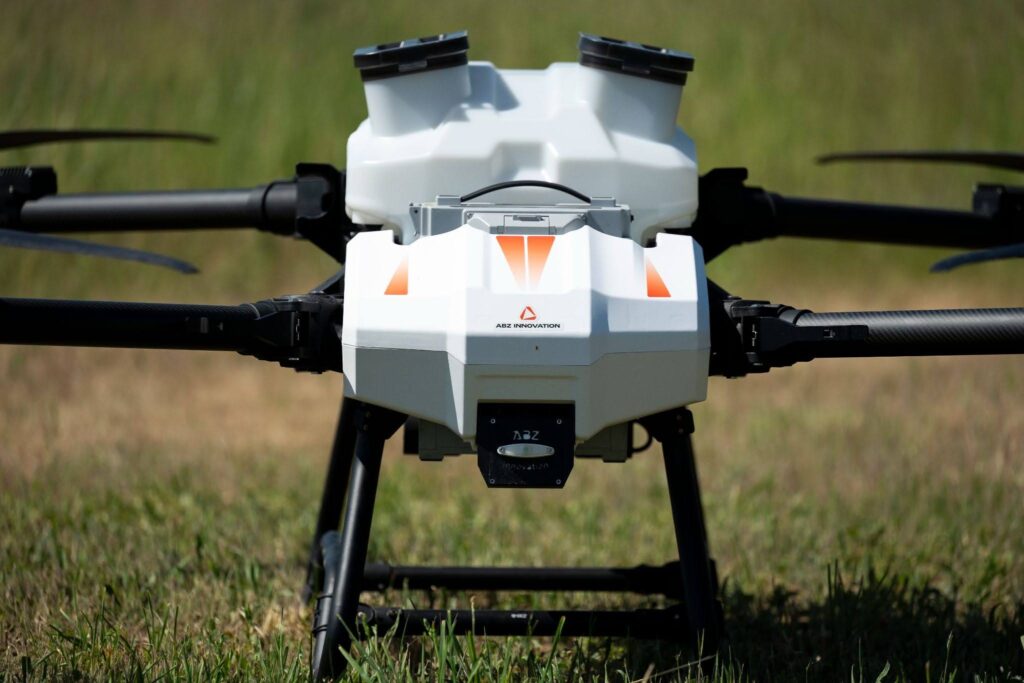
Before treatment, an uncoated transparent glass roof allows direct sunlight to enter the greenhouse. During warmer periods, this can contribute to rapid heat build-up inside the growing environment. By contrast, a uniformly applied, satin-finish shading coating delivered by an ABZ Innovation drone helps reduce intense direct sunlight and promotes more evenly distributed, diffuse light beneath the treated roof.
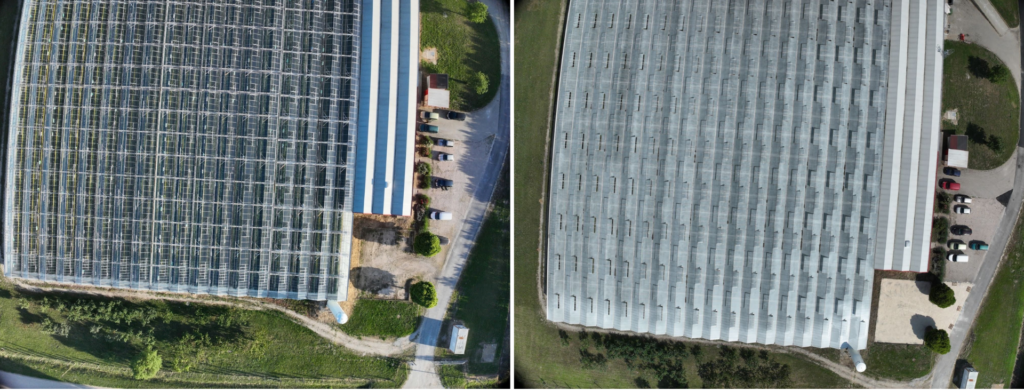
On the left, the untreated glass surface allows direct sunlight to reach the crop canopy. During summer, excessive solar radiation can increase the risk of heat stress and excessive transpiration. On the right, the uniform shading layer applied using an ABZ Innovation drone helps reduce intense localised solar exposure and provides more evenly distributed, diffuse light across the greenhouse block. This can support more stable greenhouse climate management.
Clean Glass Surfaces Following Drone-Based Cleaning
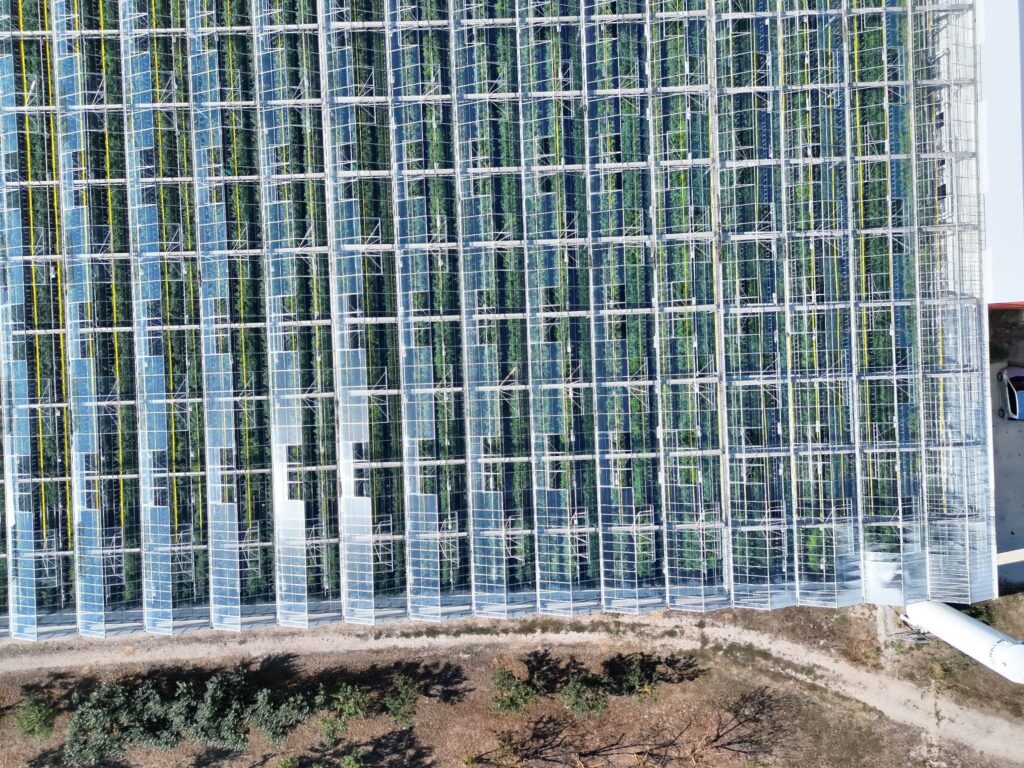
During the autumn season, a specially formulated shading-removal agent is applied to loosen and remove the existing shading coating from the roof, helping restore the glazing’s light-transmission properties.
In areas where the crops may appear less clearly visible through the roof, this does not necessarily indicate that shading compound remains on the surface. The effect may instead result from the angle of incoming light and the natural reflections produced by clean glass panels. Restoring high light transmission is important for supporting crop development during the lower-light conditions of autumn and winter.
Conclusion
Drone-based greenhouse shading in spring and cleaning in autumn can help reduce labour requirements and operating costs while supporting effective crop protection and greenhouse climate management. By combining precise flight control with an appropriate application setup, ABZ Innovation drones can help make the entire process — from seasonal shading to coating removal — more efficient, safer for personnel, and consistent in application quality.


