
Sunflower Plant Protection from Above: The Opportunities of Drone Technology from Sowing to Harvest
Sunflower (Helianthus annuus) is one of the most important and profitable oilseed crops in arable farming. Throughout its cultivation, however, growers continuously face plant protection and logistical challenges that can only be solved with compromises—or not at all—using traditional tractor-based machinery. The emergence of precision spraying drones has fundamentally transformed crop protection strategies: aerial application is no longer merely an emergency solution, but an integrated technological element covering the entire growing season.
A cornerstone of sustainable sunflower production is the protection of pollinating insects, especially honeybees, as their activity directly determines seed set and final crop yield. Drone technology opens a new dimension in this regard: thanks to precision thermal imaging and radar-based navigation, necessary plant protection treatments can be carried out safely at night or during twilight hours. This allows products to be applied outside the active foraging time of pollinators, guaranteeing maximum protection for bees during pest and disease control in the flowering period.
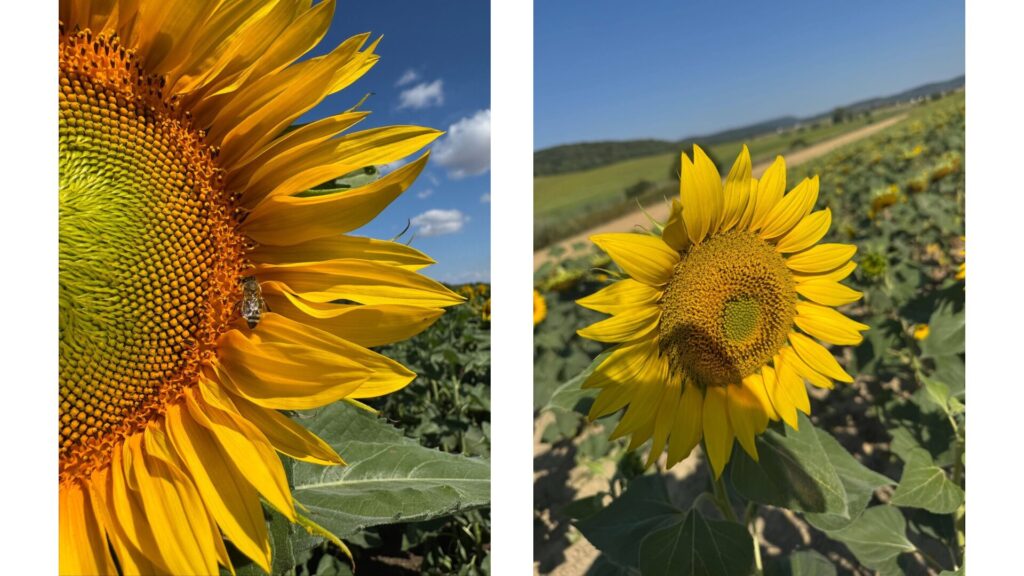
The Initial Stage: Rapid Response in the Fight Against Early Pests
During the period from germination to the 2–4 leaf stage, the sunflower stand is extremely vulnerable. Pests emerging alongside spring warming—such as Tanymecus species (weevils)—can defoliate cotyledon-stage seedlings within days due to their sudden, mass presence. Soil-borne fungi (Pythium, Rhizoctonia) and wireworms can also cause severe seedling loss during this early phase.
During this period, the greatest advantages of drone technology are spot treatment and rapid response times:
- Localized Hotspot Eradication: Weevil damage is rarely uniform; feeding most commonly originates from field margins or specific hotspots. Based on drone scouting, application can be targeted and restricted strictly to infested spots. This results in significant active ingredient savings while preserving beneficial organisms.
- Operation on Wet Soil: Following spring rains, when heavy tractors would cause structural soil damage or get stuck leaving deep ruts, the drone can seamlessly apply the necessary soil conditioners, microbial products, or plant protection products from above.
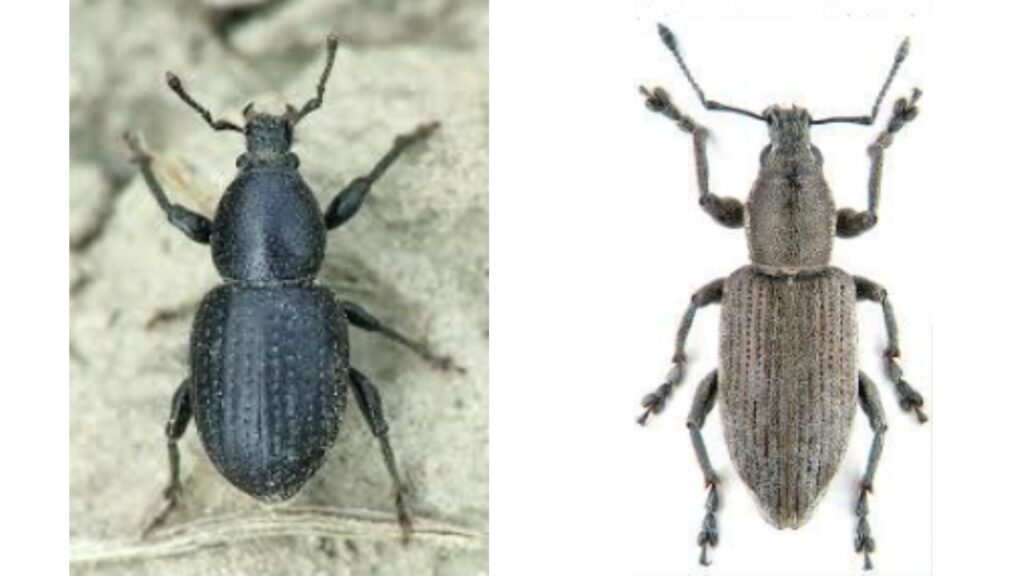
If the combined density of weevil species reaches 3–4 individuals per square meter, chemical control is strictly required. This can be achieved through insecticidal seed dressing, micro-granular soil disinfection, or foliar spraying. In cases of mass infestation, a combination of these methods may also be necessary.
2. The Intensive Growth Phase: Foliar Protection and Targeted Nutrient Replenishment
Between the 6–12 leaf stages, sunflowers enter a period of explosive vegetative growth. Concurrently, the first major fungal infections emerge, such as Phomopsis stem canker (Diaporthe/Phomopsis helianthi), which causes characteristic wedge-shaped lesions on leaves, sunflower rust (Puccinia helianthi), and Alternaria leaf spot (Alternaria helianthi). Among pests, aphids and leafhoppers can cause tissue malformation while acting as dangerous viral vectors.
During this phase, drone-based application relies on two main pillars:
- Selective Foliar Fertilization (The Role of Boron): Sunflowers are well known to be an exceptionally boron-demanding crop. Boron deficiency leads to floral organ malformation, poor fertilization, and stem cracking below the flower head. Drone-applied micro-element foliar fertilization provides rapidly absorbable, concentrated nutritional support during the plant’s most intensive growth period.
- Preventive Stem and Foliar Protection: Systemic fungicides can be applied before the canopy closes completely. The downward airflow (downwash effect) generated by the drone displaces the upper leaves, enabling the spray liquid to reach the lower canopy levels as well.
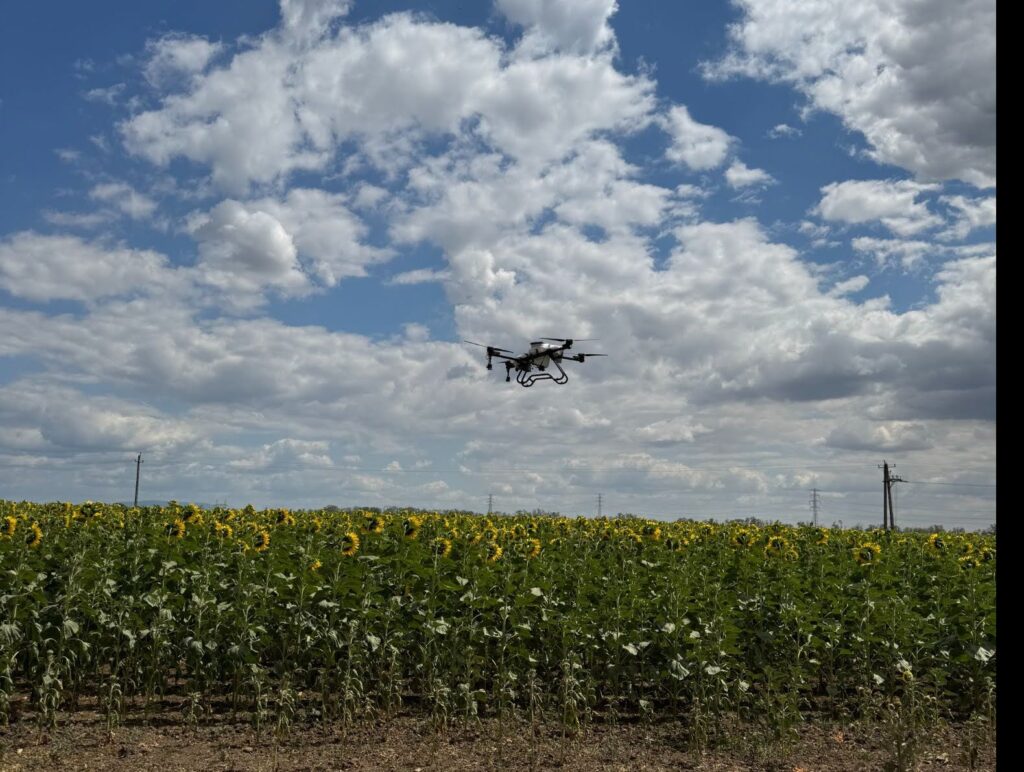
3. The Generative Stage: When Ground Machinery Can No Longer Enter
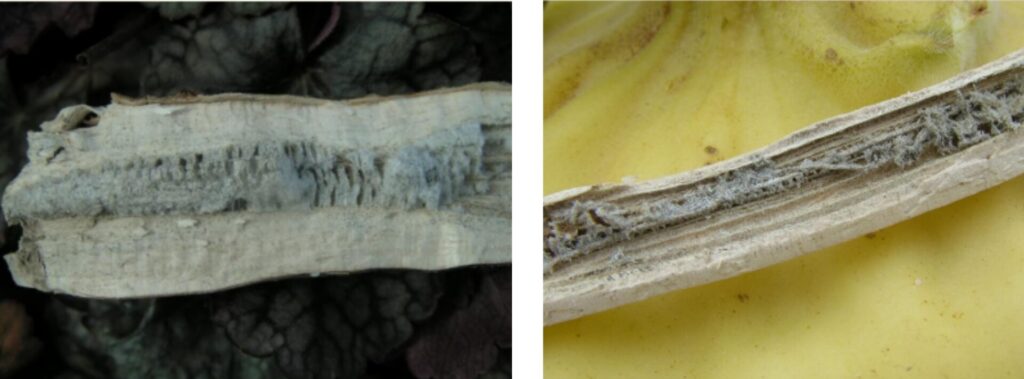
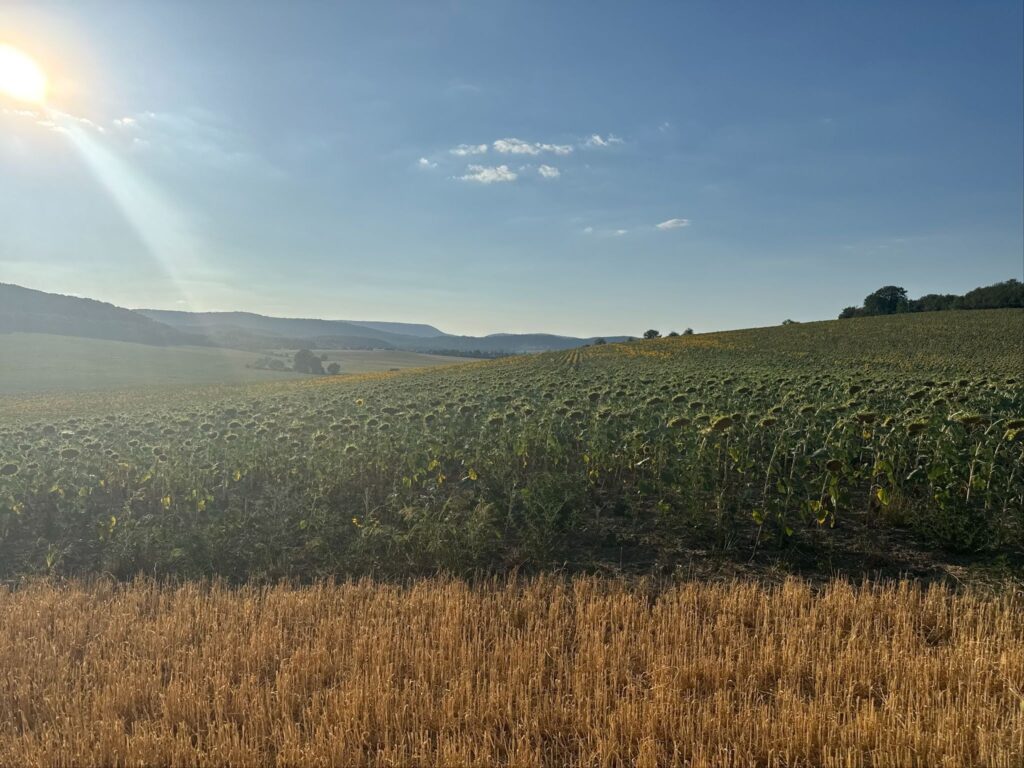
The period from the star-burst (R1) stage to the end of flowering is the most critical phase of sunflower production. By this time, the crop height reaches 1.5–2 meters, and the inter-row spaces are completely closed. During this phase, the most destructive disease of sunflowers attacks: Sclerotinia stem and head rot (Sclerotinia sclerotiorum), which threatens total crop destruction during rainy weather. In warm, dry summers, charcoal rot (Macrophomina phaseolina) causes severe tissue damage, while during flowering, larvae of the cotton bollworm (Helicoverpa armigera) inflict heavy head damage.
During this period, drone technology demonstrates unassailable advantages:
- 0% Trampling and Stalk Breakage Damage: Conventional tractors can no longer enter the tall, closed canopy, while high-clearance sprayers inevitably knock down and break stalks in headlands or in fields lacking tramlines, causing a 3–8% yield loss. Drones operate 100% contact-free, safeguarding the yield on every single square meter.
- Effective Head Protection: Protecting flowering heads with fungicides is essential. The downwash airflow generated by the drone’s rotors turbulence-rotates the flower heads and upper foliage, enabling the spray liquid to penetrate deep into the heads and the inner canopy.
4. Maturation and Harvesting: Ensuring Uniform Harvest
In most cases, sunflower ripening is uneven. Stems that remain green and slow-drying heads delay harvesting, increase grain drying costs, and allow head rot (Botrytis, Rhizopus) alongside bird damage to decimate yields during prolonged harvest periods.
- Desiccation and Ripening Acceleration: (Strictly subject to compliance with local regulations and valid temporary/permanent product authorizations in the respective country!) Applying desiccant or ripening-accelerating products makes the harvest date predictable, reduces achene moisture content to optimal levels, and prevents green weeds—such as common ragweed (Ambrosia artemisiifolia)—from overloading the combine’s threshing mechanism.
- Preventing Seed Shattering Losses: At this stage, sunflower stems are dry and brittle. The passage of any ground machinery causes flower heads to collide, leading to massive seed shattering losses. Aerial application completely eliminates this loss.
Summary
Drone-based plant protection in sunflower production is not merely a convenience technology, but a tool that directly increases farm efficiency and operational safety. Throughout the entire crop lifecycle from sowing to harvest, it provides flexible intervention regardless of crop height or soil moisture conditions. Eliminating trampling damage, drastically reducing water requirements, and preventing soil erosion all contribute to making aerial application a cornerstone of modern, sustainable agriculture.
ABZ Innovation’s L-Series spraying drones (L10 V2, L30 V2, L50) provide pioneering support in this technological transition, proving their value on arable fields worldwide by meeting the strictest international industrial and agronomic standards. Combining advanced droplet formation systems and precision terrain-following with robust operational reliability, models in this series guarantee that growers anywhere in the world achieve maximum biological efficacy and return on investment from every plant protection intervention.


