
Optimizing Drone Spray Settings:
4 Pillars of Precision
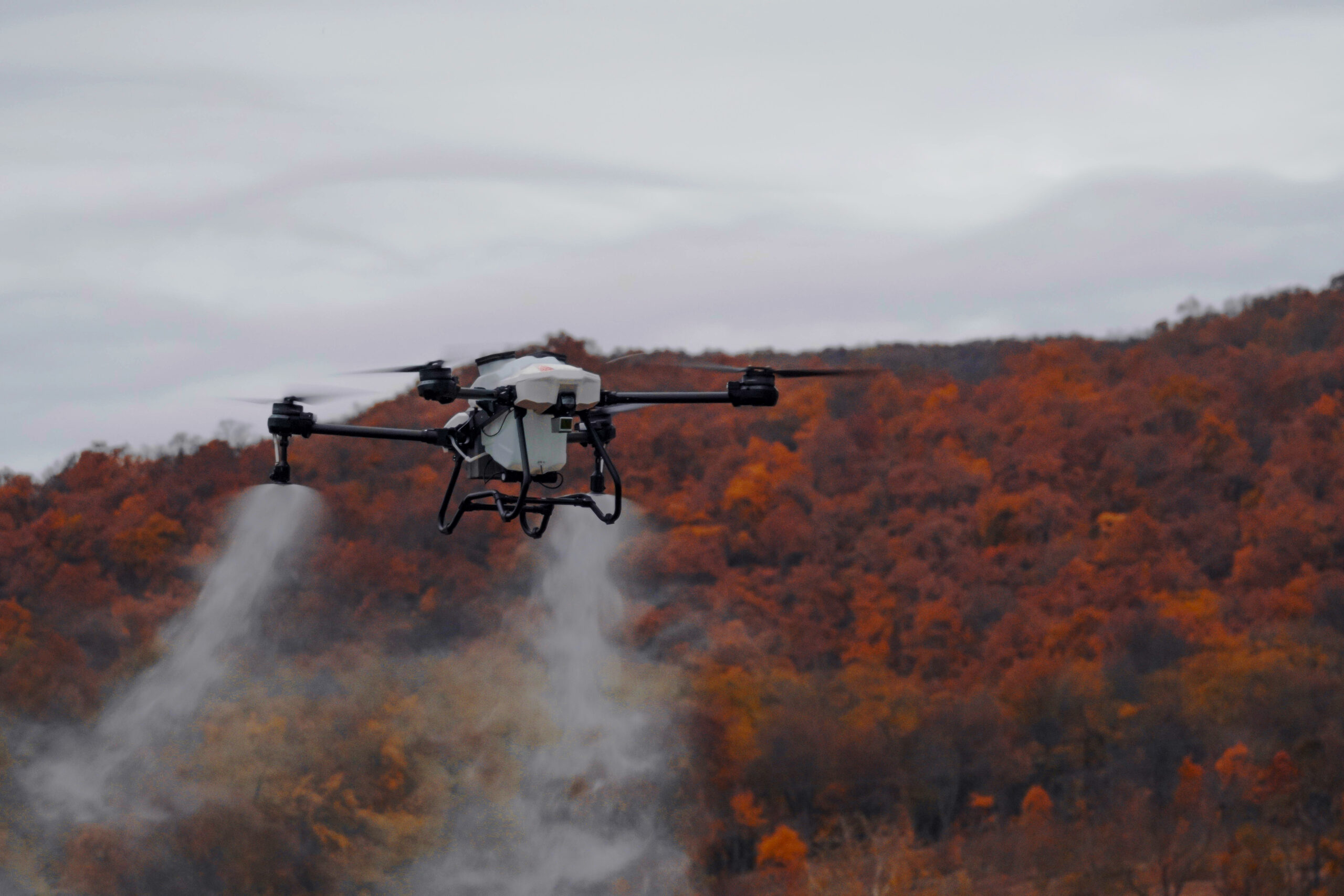
Mastering agricultural drone spraying requires understanding the invisible dynamics of the air. There is no universal “one-size-fits-all” solution. To achieve maximum efficiency, you must adapt your settings to the specific crop, treatment goals, and real-time weather conditions.
Here are the four foundational settings that guarantee a perfect application.
1. Droplet Size: Balancing Coverage and Stability
The optimal droplet size for drone spraying lies strictly between 180 and 220 micrometers.
- Smaller droplets (<180 µm): Provide excellent coverage but carry a high risk of wind drift.
- Larger droplets (>220 µm): Ensure stable application but can leave gaps on the vegetation.
Advanced technology, such as the Controlled Droplet Application (CDA) system, maintains a constant droplet size regardless of flight speed or pump pressure.
Environmental Limits: If wind speeds exceed 2 m/s, you must increase droplet size to minimize drift. During plant protection treatments, it is crucial to ensure that no spraying is conducted above 25°C; if the temperature reaches this threshold, spraying must be paused entirely. To avoid high temperatures and ensure optimal efficacy, the most ideal times for applications are the early morning, or late evening and nighttime sprayings.
2. Flight Altitude: Hitting the Target Zone
The ideal flight altitude is precisely between 2 and 3 meters above the crop canopy (please note: always adapt to the specific crop type), utilizing terrain-follow mode for consistency.
Deviating from this narrow window compromises the operation:
- Flying too low: The drone’s powerful airflow distorts the spray pattern, creating a highly uneven, striped application beneath the nozzles.
- Flying too high: Drastically increases spray drift and reduces the concentration of active ingredients reaching the target plants.
3. Flight Speed: Matching Pace with Output
The optimal flight speed must remain steadily between 4 and 8 meters per second (please note: always adapt to the local agronomic conditions).
Lower speeds ensure highly precise and uniform crop coverage, while higher speeds provide better efficiency for large, continuous fields. To maintain a consistent chemical application rate, advanced drones automatically optimize the pump output in real time to perfectly match the current flight speed.
4. Spacing: Calculating the Perfect Overlap
Accurate spacing between flight paths is essential to prevent untreated gaps and overlapping zones that waste chemicals.
Spacing is a dynamic value dependent on your other settings:
- Wider spacing: Achieved by combining higher altitudes with smaller droplets. This covers ground quickly but severely increases drift risk.
- Narrower spacing: Required when flying lower. This minimizes drift and forcefully drives droplets deep into the crop canopy.
The Bottom Line
True precision comes from treating droplet size, altitude, speed, and spacing as one integrated system. Proper calibration maximizes biological efficiency, significantly reduces chemical waste, protects the environment, and ensures consistent, repeatable results across every hectare.
You can also watch our webinar on this topic:


