
Spray Pattern Test in Vineyard with L50 Spraying Drone: Coverage Settings
When protecting vineyards situated on steep slopes or narrow rows, traditional tractor-mounted and backpack sprayers increasingly run into physical limitations. During our latest project, we demonstrated what our market-leading technology can achieve under challenging field conditions: the ABZ Innovation L50 spraying drone, which ensures thorough coverage using a fraction of the water volume thanks to modern ULV (Ultra Low Volume) technology. Due to the design of the nozzles, this allows for the application of the same active ingredient with order-of-magnitude less water during spraying operations. Our objective was to evaluate the application rates required to achieve optimal coverage in a vineyard. Beyond overcoming narrow row spacing, drone application eliminates operator exposure to chemicals and physical fatigue on steep slopes, while preventing soil compaction caused by heavy machinery.
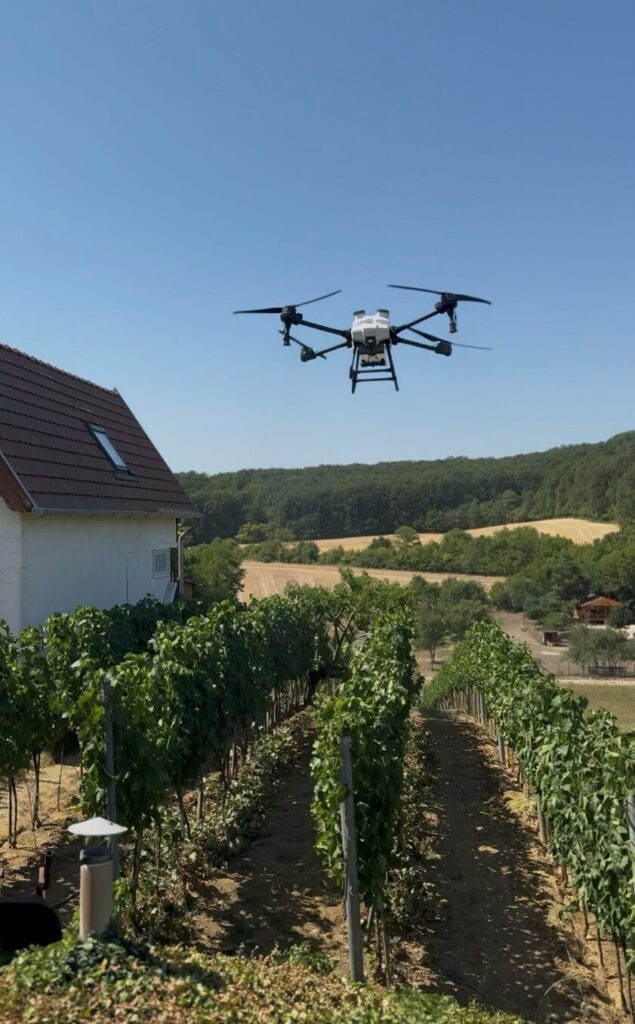
Test Conditions
It is important to emphasize that this was a demonstration test where only water was applied to analyze the spray pattern under field conditions using water-sensitive paper. We utilized the ABZ Innovation L50 spraying drone for this task; compared to arable crop spraying, vineyards require significantly higher application rates, making this drone’s tank capacity far more efficient under these operational conditions.
The weather during the test was completely windless, providing ideal conditions for spraying. The vineyard was situated on a steep hillside with vines arranged across 4 rows, according to which we tailored the flight path.
Testing Process: Dose Optimization for Optimal Results
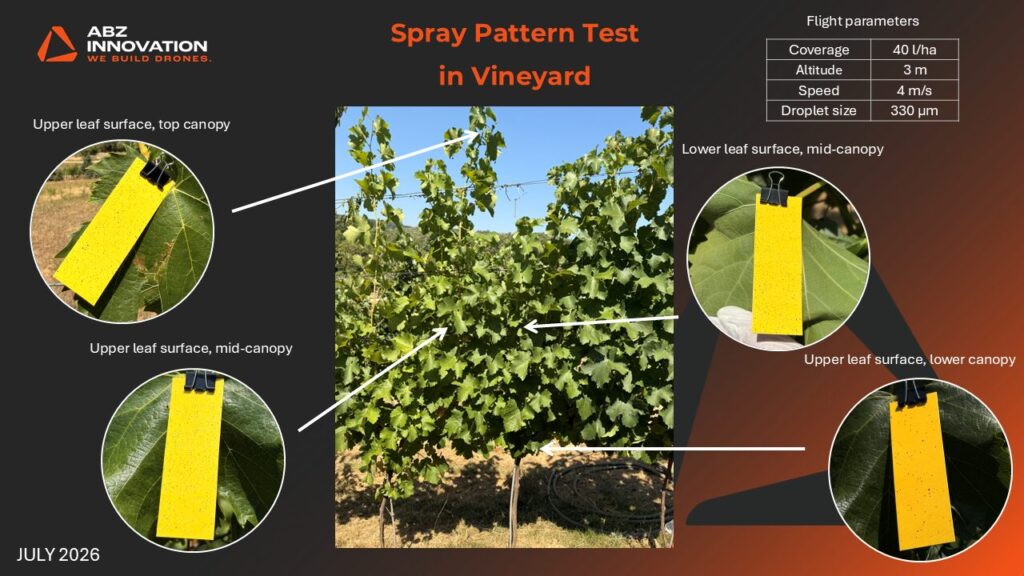
We executed flights using 3 different application rates: 25, 40, and 50 L/ha. The remaining constant flight parameters throughout the test were:
- Altitude: 3 m
- Speed: 4 m/s
- Droplet size: 330 μm
The controlled droplet application (CDA) technology ensures a highly uniform droplet spectrum centered at 330 μm. Combined with the downward airwash (vortex) generated by the rotors, this minimized spray drift and ensured the droplets were targeted directly into the canopy.
Positioning of Water-Sensitive Paper
To evaluate the complete vertical coverage of the canopy, water-sensitive papers were mounted at three height levels (upper, middle, and lower). Indicator papers were placed on the upper leaf surface across all three zones, as well as on the lower leaf surface in the denser middle region to monitor the leaf-turning effect driven by the drone’s downwash vortex.
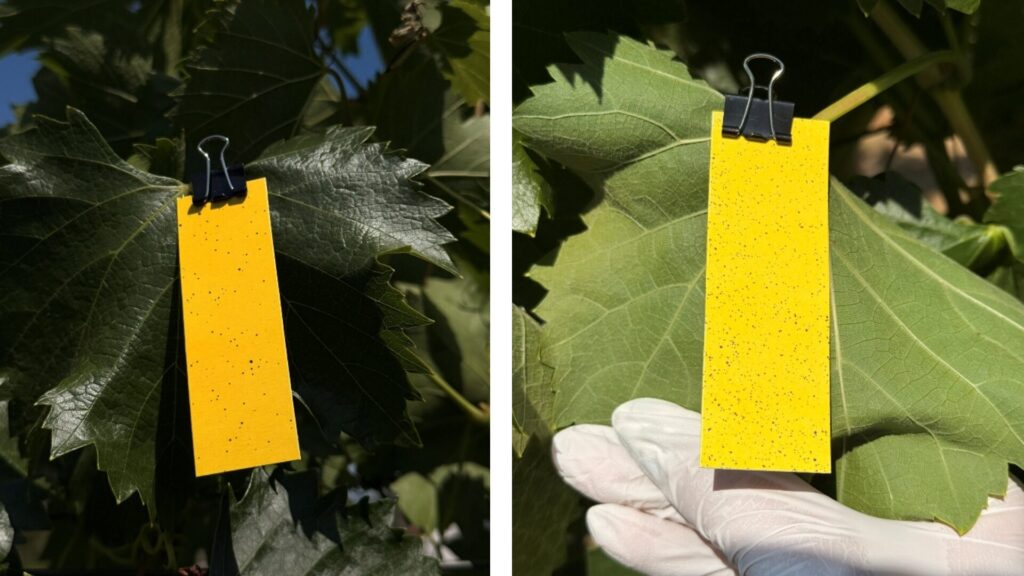
Water-sensitive paper placed on the upper and lower leaf surfaces.
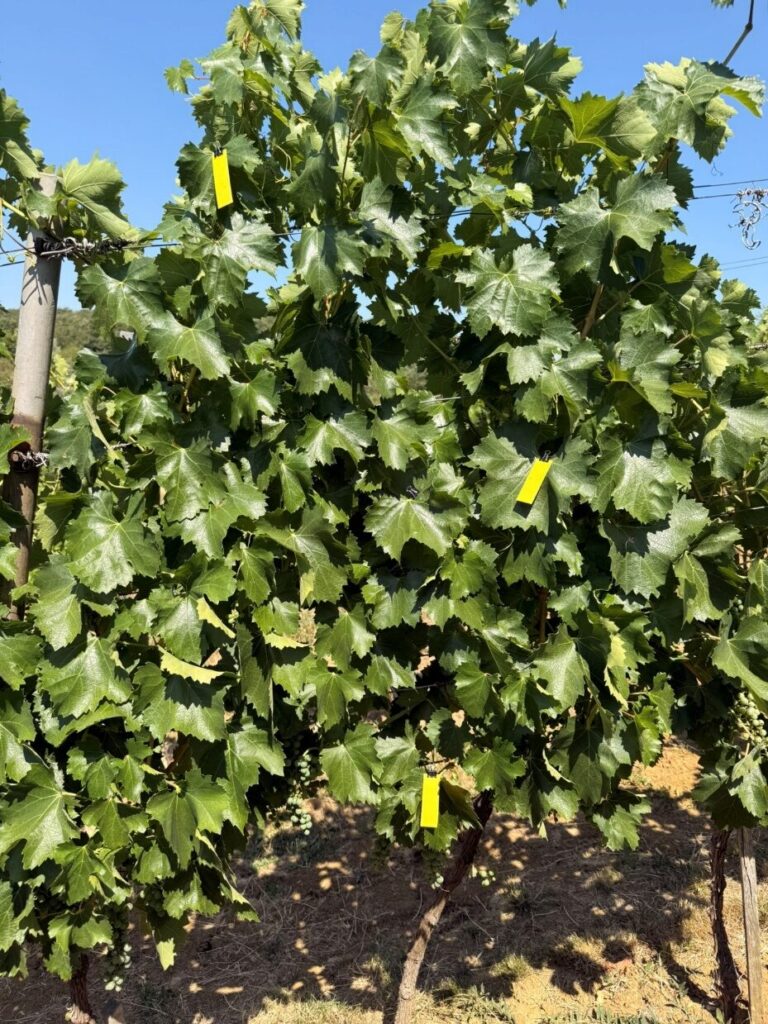
Resultados
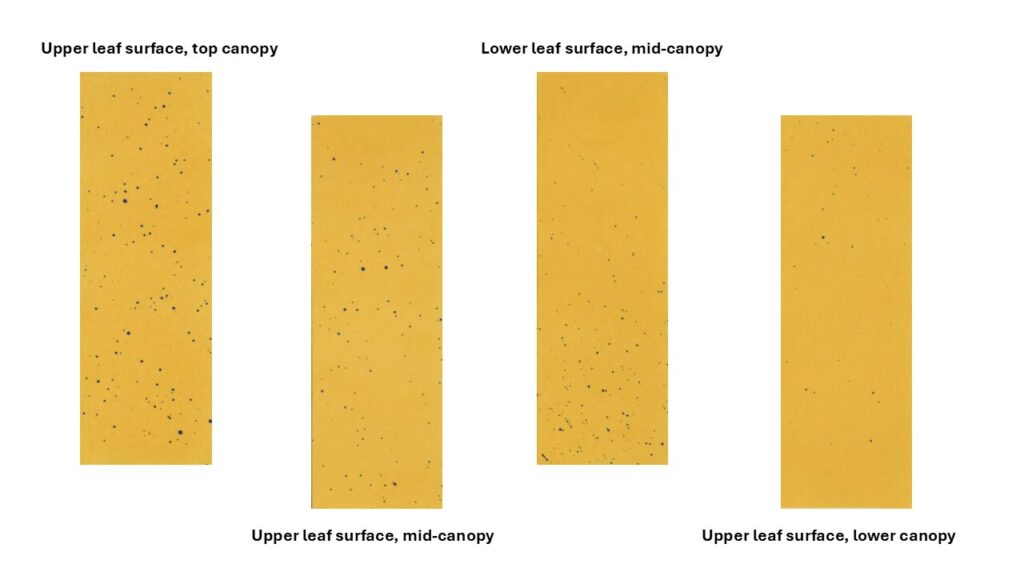
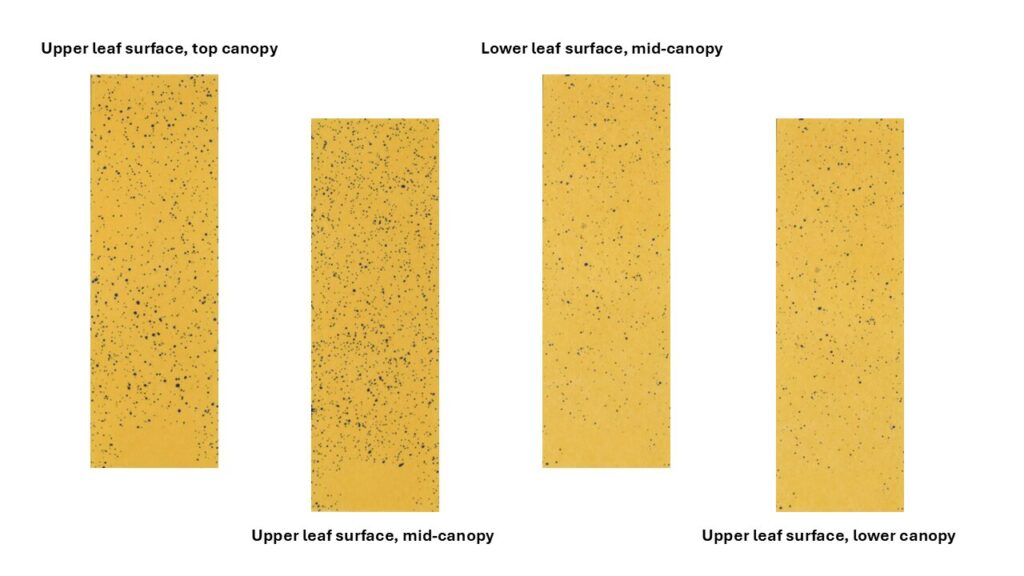
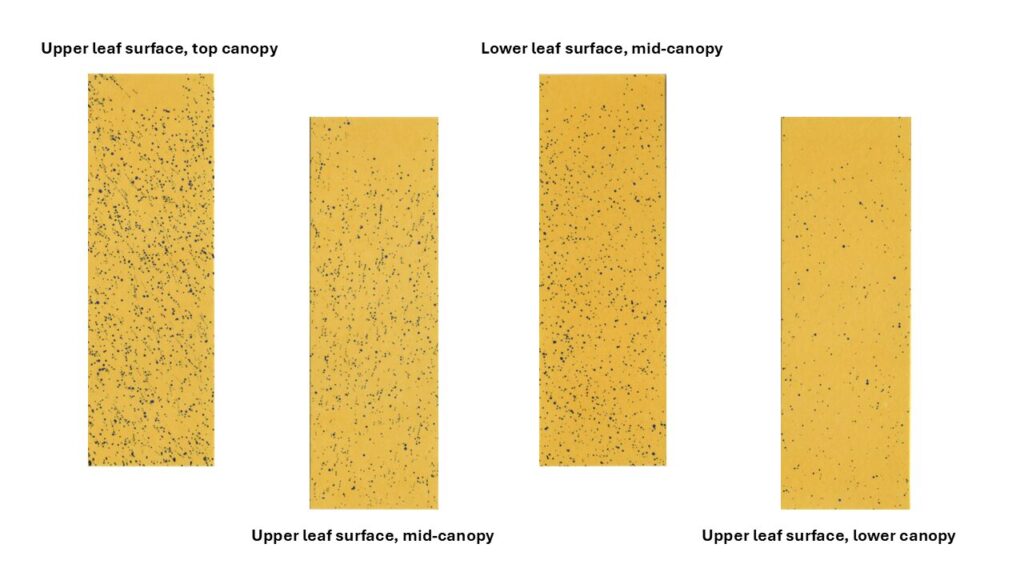
During the test, spraying was conducted using multiple dose settings, after which the deployed samples were collected and evaluated between flights. Based on the results, the 25 L/ha application rate from the first flight proved insufficient; consequently, we increased the rate to 50 L/ha and subsequently evaluated the spray pattern at 40 L/ha.
- 25 L/ha: The initial run revealed that this volume was insufficient, as inadequate spray reached the lower canopy levels and the undersides of the leaves.
- 50 L/ha: The next increment yielded the expected, ideal spray pattern.
- 40 L/ha: Fine-tuning demonstrated that this setting achieves virtually the same excellent coverage and target droplet density as higher volumes. This makes it the most cost- and resource-efficient configuration, significantly lowering operational costs and chemical use.
Field Challenges Couldn’t Stop Drone Spraying
One of the greatest advantages of drone application is the savings in time and energy, alongside overcoming difficult terrain. At the test site, the inter-row spacing of the vineyard was under 1.5 meters, which would have prevented a conventional tractor from entering the rows altogether.
The slope angle of the terrain and a peach tree situated between the rows further complicated the workflow; however, the drone’s obstacle avoidance system handled this seamlessly and resumed its flight path.
Customer Satisfaction: Exceptional Speed and Convincing Results
The owner of the vineyard monitored the entire spraying test and was extremely satisfied with the results. Using traditional manual backpack spraying, treating these same 4 rows of vines would have taken 1 hour. In contrast, with the ABZ Innovation L50 drone, the complete application process—including setup and preparation—would take a mere 10 minutes.
The speed, precise treatment of terrain inaccessible by tractor, and excellent coverage convinced the owner to utilize our company’s drone spraying services in the future.

The test was conducted as a joint initiative by ABZ Innovation and ABZ Drone Kft.
IMPORTANT NOTICE: This experiment serves strictly as a baseline. In practical commercial applications, spraying configurations, flow rates, and other flight parameters must always be adjusted dynamically to adapt to specific crop vegetation and field layouts, microclimates, and ambient environmental conditions.
Unauthorized reproduction or plagiarism of this work is strictly prohibited. Proper citation is required for any use of its content.


