
Mastering Trichogramma Applications: Forecasting, Species Selection, and Practical Tips
Biological plant protection is a fundamental pillar of sustainable agriculture. Within this system, Trichogramma egg parasitoid wasps play an irreplaceable role, providing a natural and highly effective defense against devastating pests—a critical component of modern crop protection strategies.
Target Pests and Mechanisms of Damage
Among Trichogramma parasitoid wasps, several species efficiently parasitize pest eggs. Drone-based application of Trichogramma is most effectively deployed in arable farming, particularly in maize and sunflower crops. In these fields, significant damage is caused by the larvae of the cotton bollworm (Helicoverpa armigera) and, in maize, the European corn borer (Ostrinia nubilalis). Beyond causing direct yield losses through feeding, these pests indirectly trigger severe plant and human health issues via secondary infections that follow their damage.
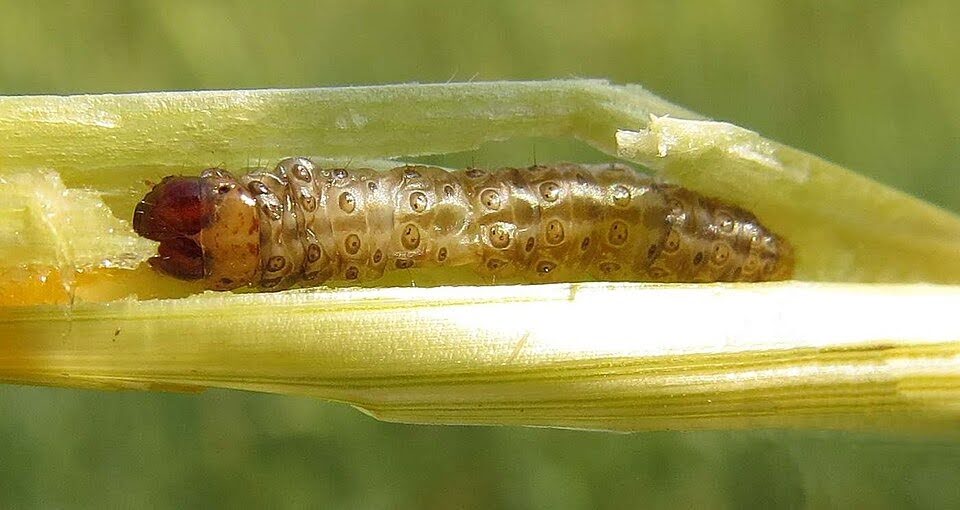
- European Corn Borer (Ostrinia nubilalis): The caterpillars primarily bore into the maize stalks. By consuming internal tissues, they drastically weaken stalk strength. Fungi (e.g., Fusarium spp.) colonize the feeding tunnels, causing stalk rot that can lead to premature lodging and crop destruction.
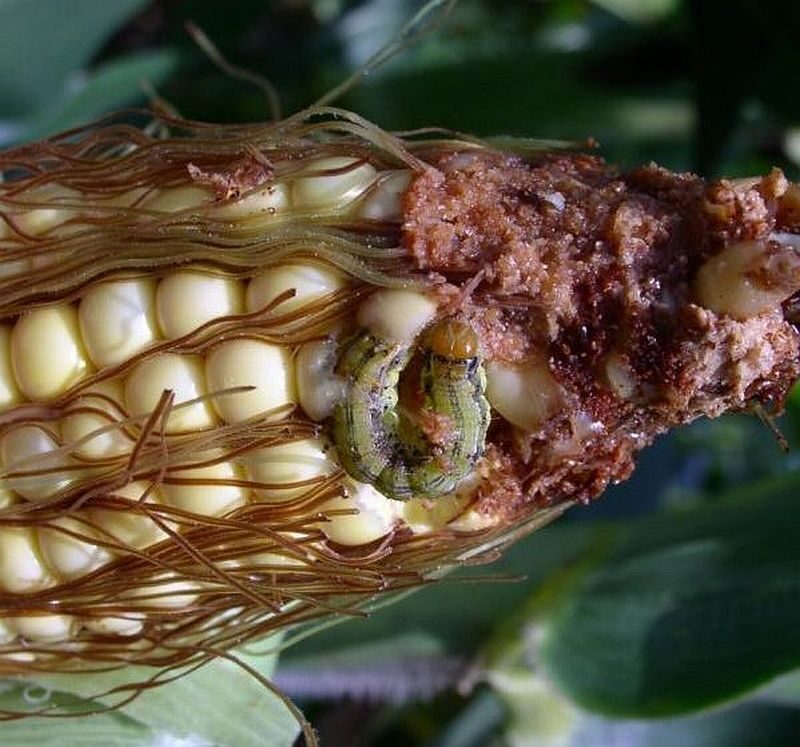
Cotton Bollworm (Helicoverpa armigera): This species specifically bores through the husk leaves at the ear tips to reach the developing kernels. The feeding damage creates an immediate entry point for dangerous, mycotoxin-producing fungi, such as Fusarium, Penicillium, and Aspergillus species.
Key Trichogramma Species
Because pest species and ecological conditions vary by region, different wasp species are deployed for targeted control. In Europe, the following are the most prominent:
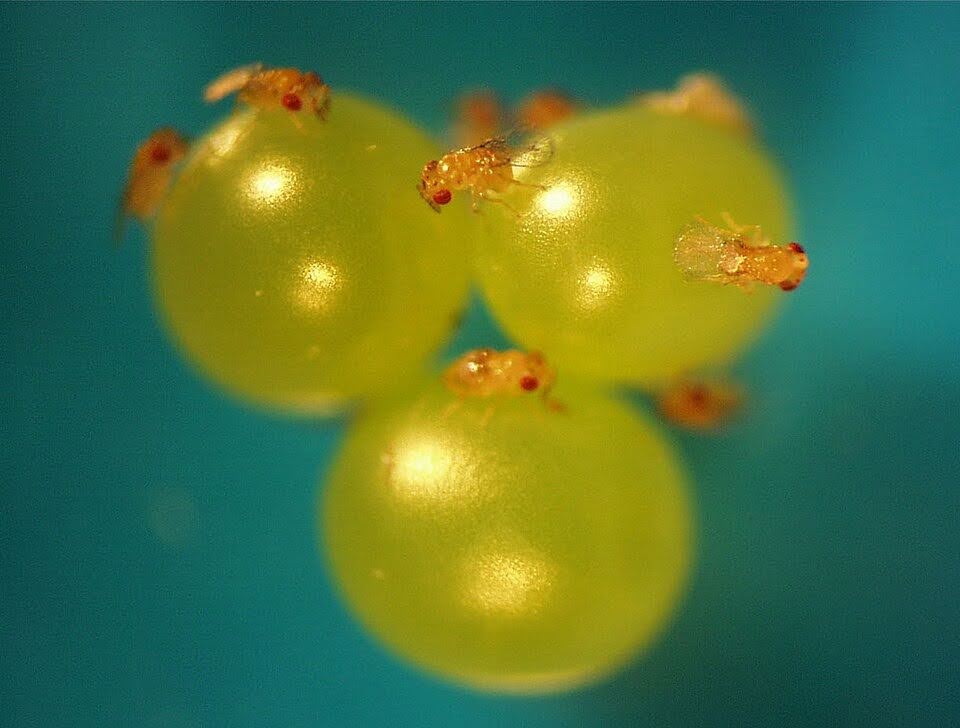
- Trichogramma evanescens and T. brassicae: Central Europe’s most vital species against the European corn borer and other field crop pests. While T. evanescens is a highly aggressive, native searching species, T. brassicae is a specialized flyer, exceptionally adapted to dense maize canopies.
- T. pintoi: Frequently deployed against field cutworms and owlet moths, often mixed with other species to maximize efficacy.
- T. cacoeciae: A woody plant specialist found in European orchards (apple, plum) and vineyards. Uniquely, it reproduces via parthenogenesis, producing exclusively female offspring, which leads to exceptionally rapid parasitism rates.
Global Perspective: In other parts of the world, species adapted to local conditions are used on an industrial scale. For example, in the Americas, Trichogramma pretiosum is the top choice (applied via drones over massive cotton and soybean plantations), whereas in Asia, Trichogramma dendrolimi is most common.
Forecasting Methodology: The Critical Window
The key to successful control lies in identifying biological, ecological, and ethological indicators. Trichogramma wasps must be deployed within a precise 1-to-3-day window following the peak moth flight.
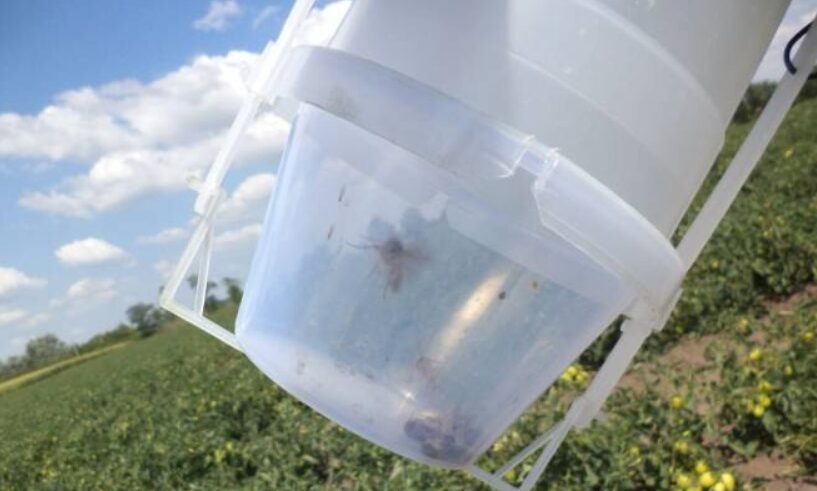
- Sex Pheromone Trapping: For the cotton bollworm, which is capable of cross-continental migration, international networks immediately signal the arrival of populations, helping coordinate control efforts.
- Scent and Light Traps: The European corn borer has distinct genetic races (e.g., the “E” and “Z” strains, which respond to different pheromone compositions). Consequently, scent traps may often remain empty; therefore, light traps, which capture both sexes, provide the most accurate assessment.
- Growing Degree Day (GDD) Calculation: Insect development rate depends on temperature. By subtracting the base temperature from the daily mean temperature, we obtain the accumulated “developmental energy,” allowing for precise prediction of egg hatch.
- On-Site Field Inspection: For the European corn borer, look for roof-like egg masses on the undersides of leaves, observing for the “black-head” stage just prior to hatching. For the cotton bollworm, inspect the reproductive structures, tender corn silks, and husk leaves. Females lay their small, ribbed, yellowish-white eggs individually on fresh silk threads.
Practical Placement Tips:
- Storage: Keep refrigerated at 5–10 °C until application.
- Dosage: 75–80 capsules/ha for field corn (grain maize), and 100 capsules/ha for sweet corn. Under high pest pressure, continuous releases every 1–2 weeks are recommended; a single capsule remains effective for approximately 14 days.
- Weather and Chemicals: Avoid overhead sprinkler irrigation for at least one week following placement. Furthermore, the use of insecticides is strictly prohibited in the treated area for at least one month.
Summary: The technological key to successful in crop protection
Precise forecasting is only as effective as the application itself. Highly delicate parasitoid pupae require careful handling, which is why the ABZ Innovation L10 drone and its custom-engineered spreader system offer the ideal solution. Designed specifically for vulnerable biological inputs, this technology guarantees impact-free, damage-free capsule distribution with an exceptionally uniform spread pattern. Guided by centimeter-accurate flight paths, the system ensures optimal field coverage without causing crop damage or requiring intensive manual labor.


