
How to Safely Apply Trichogramma Capsules
Even the most flawless biological plant protection theory fails if application quality is compromised. Today, for the placement of sensitive biological inputs like Trichogramma wasps, the combination of drone technology and specialized capsule packaging offers the safest and most innovative solution.
The Genius of the Trichogramma Capsule
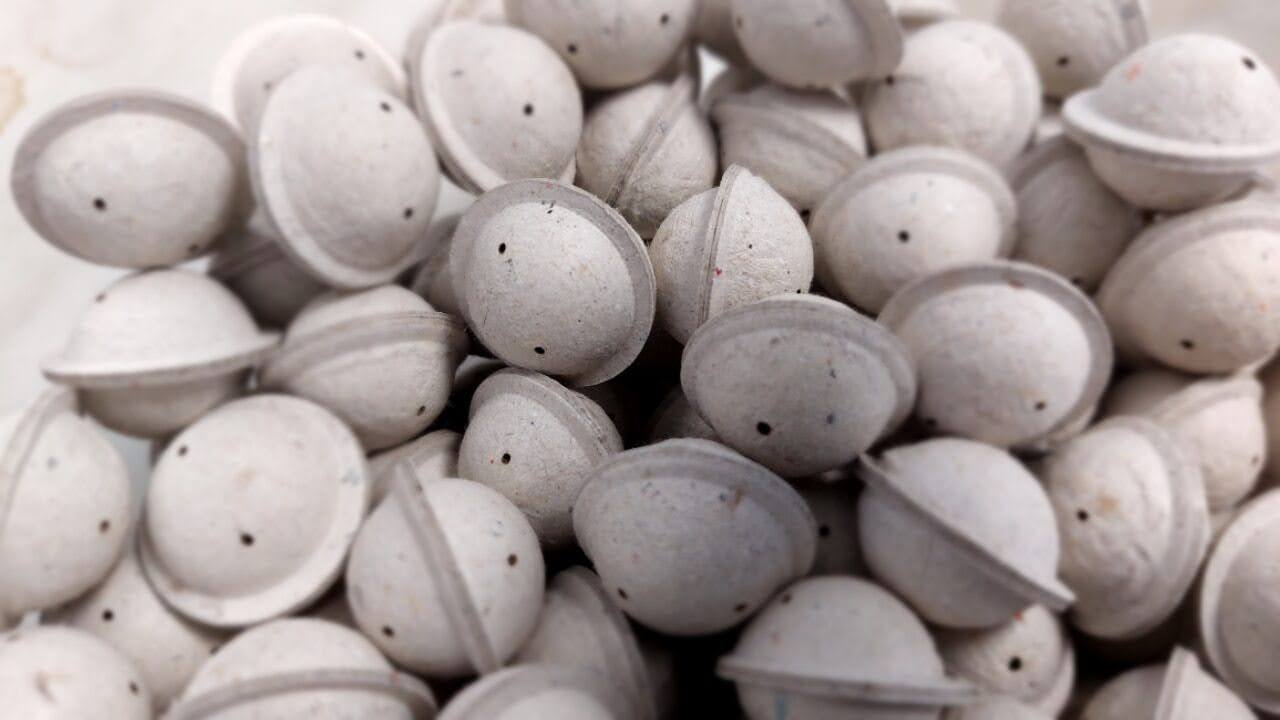
The most advanced format is a perforated sphere approximately 2 to 3 cm in diameter. It is made of pressed cellulose (paper pulp), cornstarch, or other plant fibers, which fully biodegrades in nature within a few weeks upon exposure to moisture. Inside the sphere are eggs of a host insect (such as the Mediterranean flour moth), inside of which 1,000 to 2,000 Trichogramma pupae per capsule are already developing.
The tiny millimeter-sized exit holes on the surface of the capsule are engineered with high precision: they are small enough to prevent the host eggs from falling out and to keep ants or birds at bay, yet large enough for the newly emerged wasps—measuring a mere 0.5 mm—to walk out easily.
This capsule design is indispensable for three fundamental reasons:
- Mechanical Protection During Application: When a drone flies at speeds of 15–20 km/h, the mechanisms of the dispenser and the impact of dropping would instantly crush exposed eggs. The rigid capsule shell provides complete protection for the pupae against physical impacts.
- Optimal Microclimate: The enclosed space shields the delicate pupae from harsh UV radiation and rapid desiccation, while preventing an early-morning rain shower from simply washing them off the maize leaves onto the soil.
- Extended Emergence: Manufacturers intentionally package pupae at various developmental stages into a single sphere. Consequently, the wasps do not emerge all at once, but rather in 2–3 successive waves over a period of 7–10 days. This ensures a continuous supply of biological control agents across the field, even if the flight of the European corn borer is prolonged. Once warm temperatures trigger the “invasion” of wasps from the spheres, the pests stand no chance.
The Trichogramma Spreader System
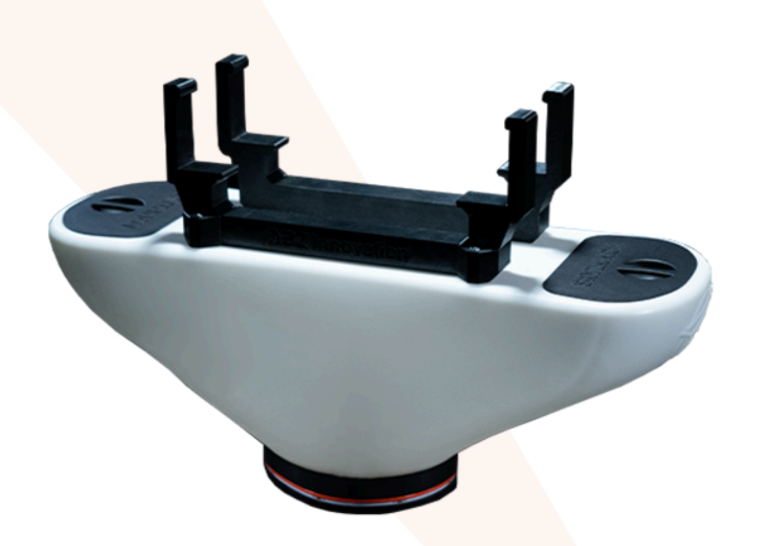
This system—featuring the ABZ Innovation L10 V2 drone and its specially developed spreader system—was engineered specifically for the precise and safe application of delicate biological materials like these. Flying along pre-planned flight paths with millimeter-level precision, the aircraft guarantees that the capsules are distributed evenly across the crop canopy without suffering any damage. Falling from the drone, the spheres drop between the maize leaves, lodging near the leaf axils (or reaching the ground), where they immediately begin providing protection.
Why Drone-Based Application Represents the Future of Agriculture
- Zero Crop Damage: Unlike operations conducted with heavy machinery or high-clearance tractors, the drone makes zero physical contact with the crop. It does not break the stalks of taller plants, thereby avoiding direct yield losses and preventing mechanical wounds that would otherwise serve as entry points for pathogens.
- Exceptional Area Coverage and Speed: Thanks to drone speeds and automated flight planning, operations are drastically accelerated. Vast fields that previously required days of conventional treatment can now be covered rapidly.
- Complete Replacement of Manual Labor: Hand-placing Trichogramma capsules on foot in tall maize crops is physically grueling, labor-intensive, and time-consuming, while consistent distribution remains difficult to verify. Drones completely relieve human labor requirements while eliminating errors stemming from fatigue or human oversight.
- Superior Cost-Efficiency: Compared to traditional tractor- or aircraft-based crop protection methods, a drone’s fuel and logistical costs are virtually negligible.


