
Droplet Size Optimization
for Maximum Yield
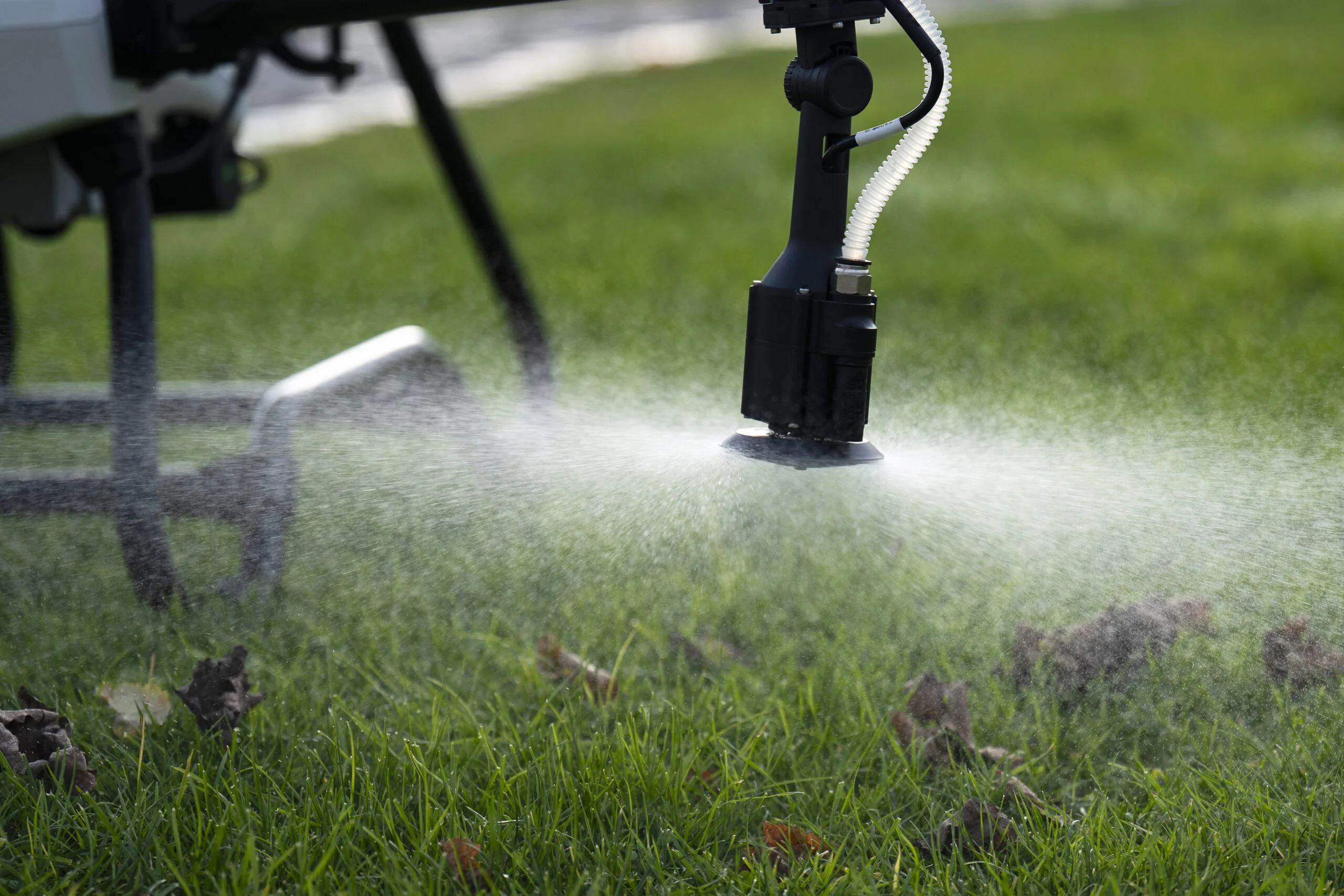
The difference between a merely “good enough” job and a truly professional, high-yield drone spraying operation comes down to one crucial factor: droplet size optimization. With ABZ Innovation’s solutions, you not only save on expensive chemicals but also drastically improve application efficiency while protecting the environment.
The 3 pillars of successful spraying there is no room for guesswork. Before takeoff, every professional pilot must perfectly align three critical elements:
- The biological target: Fungi, insects, or desiccation? This determines the required coverage.
- The active ingredient: Are you using a systemic or a contact-based product? This dictates the droplet strategy.
- Meteorological conditions: Wind, temperature, and humidity directly affect drift and evaporation.
The technological breakthrough: CDA technology while traditional hydraulic pressure nozzles create an inconsistent droplet spectrum and drift-prone “fine dust” (mist), the CDA (Controlled Droplet Application) technology preferred by ABZ utilizes centrifugal force.
- The result: Droplet size and flow rate become completely independent of each other.
- The advantage: Precise, predictable droplet formation with minimized drift and evaporation. Additionally, the downward turbulence (prop-wash) generated by the drone’s propellers ensures that the spray coats even the underside of the leaves.
How to choose droplet size? The general industry standard ranges between 180 and 220 microns, but true precision lies in adaptation:
- When to use small droplets? In light wind and cooler weather. This provides maximum, uniform coverage, which is critical for contact-action products.
- When to switch to large droplets? In stronger winds and warm weather. Larger, heavier droplets penetrate the canopy excellently, reduce drift, and resist rapid evaporation. Larger droplets can also be used for systemic-action products.
Pro-Tip for maximum efficiency: Efficiency can be further enhanced by using adjuvants (drift control agents). These modify viscosity, improve adhesion to the leaf surface, and stabilize droplets even in dry, warm conditions.
Droplet size optimization extends beyond a routine technical adjustment; it is a deliberate agronomic strategy evaluated prior to every deployment. Powered by advanced CDA technology, this methodology ensures precision-targeted, ecologically sustainable application, maximizing the deposition rate and bio-efficacy of the active ingredient in every single droplet.
You can also watch our webinar on this topic:


