
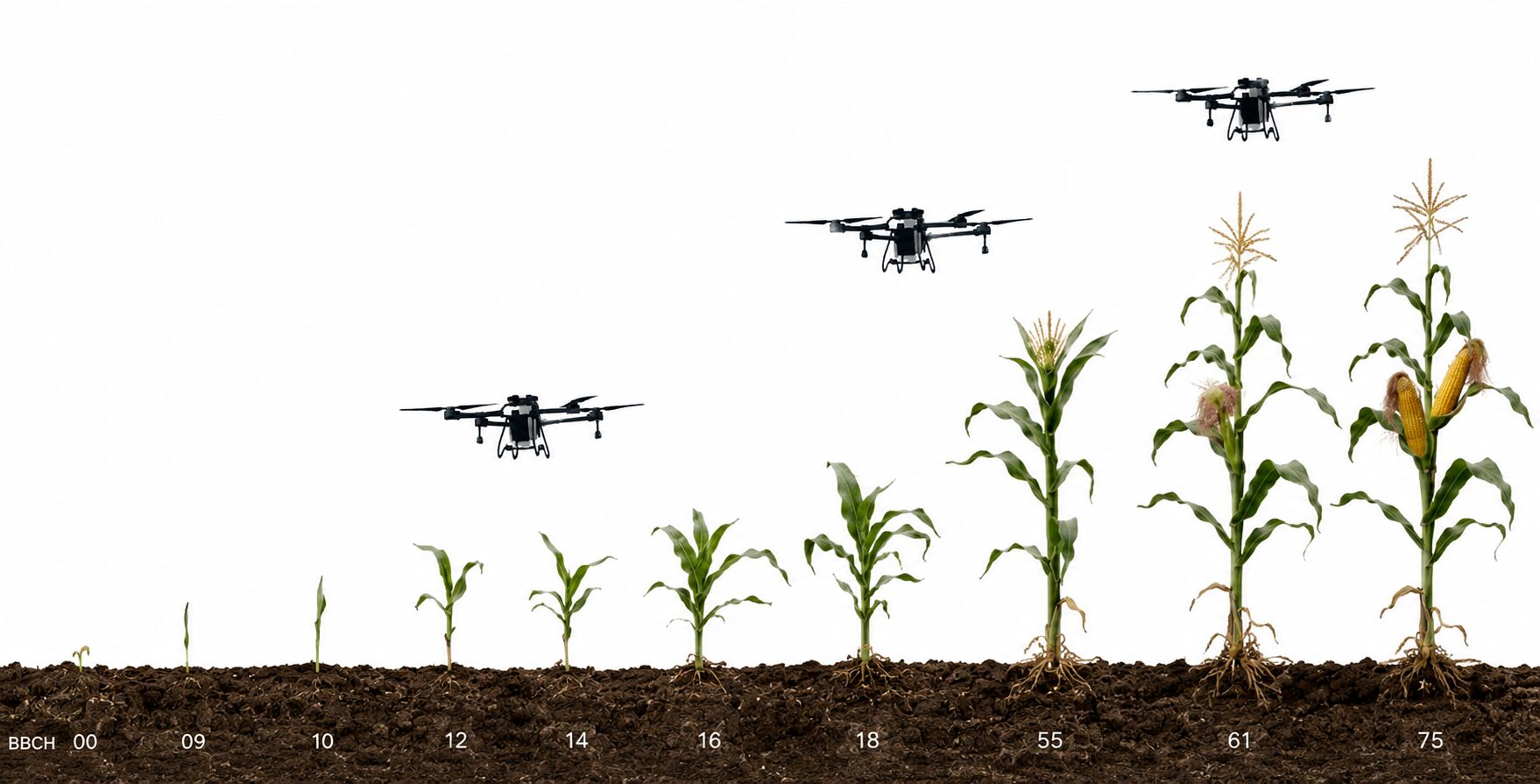
Click a drone above to see the recommended tank-mix and timing details for that spray window.
1. Early Vegetative Stage (BBCH 10–18)
| Growth Stage | Phenology | Treatment Type | Why is it important? |
|---|---|---|---|
| BBCH 10–16 | Early 1–6 leaf stage | Post-emergence Herbicide Application | Elimination of early weed competition in young crop stands. Strictly control spray drift during application. |
| BBCH 16–18 | 6–8 leaf stage | Foliar Fertilizer: Zinc (Zn), Manganese (Mn), Nitrogen (N) + Amino Acids | Canopy coverage reaches the required threshold for effective foliar uptake. Zinc (Zn): Crucial for ear initiation (differentiation) and root development. Manganese (Mn): Essential for photosynthesis; assists young corn in quickly overcoming early cold and moisture stress. Nitrogen (N): Drives rapid cell division during ear initiation (determining potential ear size and kernel row count). Acts as a nutrient carrier by increasing cuticle permeability, significantly boosting the uptake of co-applied Zn, Mn, and amino acids. Amino acids: Mitigate herbicide-induced growth stunt (phytotoxicity) and significantly enhance nutrient absorption, especially in low-volume drone applications. |
2. Intensive Growth and Tasseling (BBCH 30–59)
| Growth Stage | Phenology | Treatment Type | Why is it important? |
|---|---|---|---|
| BBCH 30–39 | Stem elongation | Foliar Fertilizer: Amino acids, Zinc (Zn) and Sulfur (S) | Meeting the high nutrient demand of expanding green biomass and supporting rapid protein synthesis during the intensive growth phase. |
| BBCH 34–51 | Tassel emergence (Green tassel) | Biological Control: Trichogramma (1st Release) OR Insecticide Application (1st Generation Control) | Control of 1st generation European corn borer (Ostrinia nubilalis) larvae before they bore into the stalk. Attention: If Trichogramma is applied, suspend chemical insecticide treatments for 1 month! |
| BBCH 51–59 | Tasseling | Insecticide Application OR Biological Control: Trichogramma (2nd Release) | Insecticide: Protection against 2nd generation European corn borer (Ostrinia nubilalis), cotton bollworm (Helicoverpa armigera), and Western corn rootworm adults (Diabrotica virgifera). Biological Control: Control of 2nd generation European corn borer and cotton bollworm. Note: Trichogramma is exclusively effective against lepidopteran pests! Attention: If Trichogramma is applied, suspend chemical insecticide treatments for 1 month! |
3. Flowering and Grain Filling (BBCH 61–75)
| Growth Stage | Phenology | Treatment Type | Why is it important? |
|---|---|---|---|
| BBCH 61–65 | Flowering / Silking | Foliar Fertilizer (Boron (B) & Zinc (Zn)) | Boron & Zinc: Essential for silk development, pollen viability, and successful fertilization. |
| Fungicide Application (Ear Protection) | Green silks represent the most critical window for preventing Fusarium ear rot (Fusarium spp.) and mycotoxin contamination. | ||
| Insecticide Application | Protection against Western corn rootworm adults feeding on silks and cotton bollworm larvae. | ||
| BBCH 71–75 | Grain filling / Kernel development | Late Fungicide Application | Prevention of late-season Fusarium ear rot and, under hot/dry conditions, Aspergillus ear rot (aflatoxin contamination). |
| Late Insecticide Application | Control of cotton bollworm larvae feeding on ears, preventing feeding wounds that serve as entry points for fungal infections. Strict PHI Rule: Use only products with a short Pre-Harvest Interval (PHI) to guarantee complete active ingredient breakdown prior to harvest. |
Precise application timing always depends on the specific crop year, local environmental conditions, and real-time pest/pathogen pressure. Always consult a certified agronomist or plant protection specialist prior to executing chemical or biological treatments.
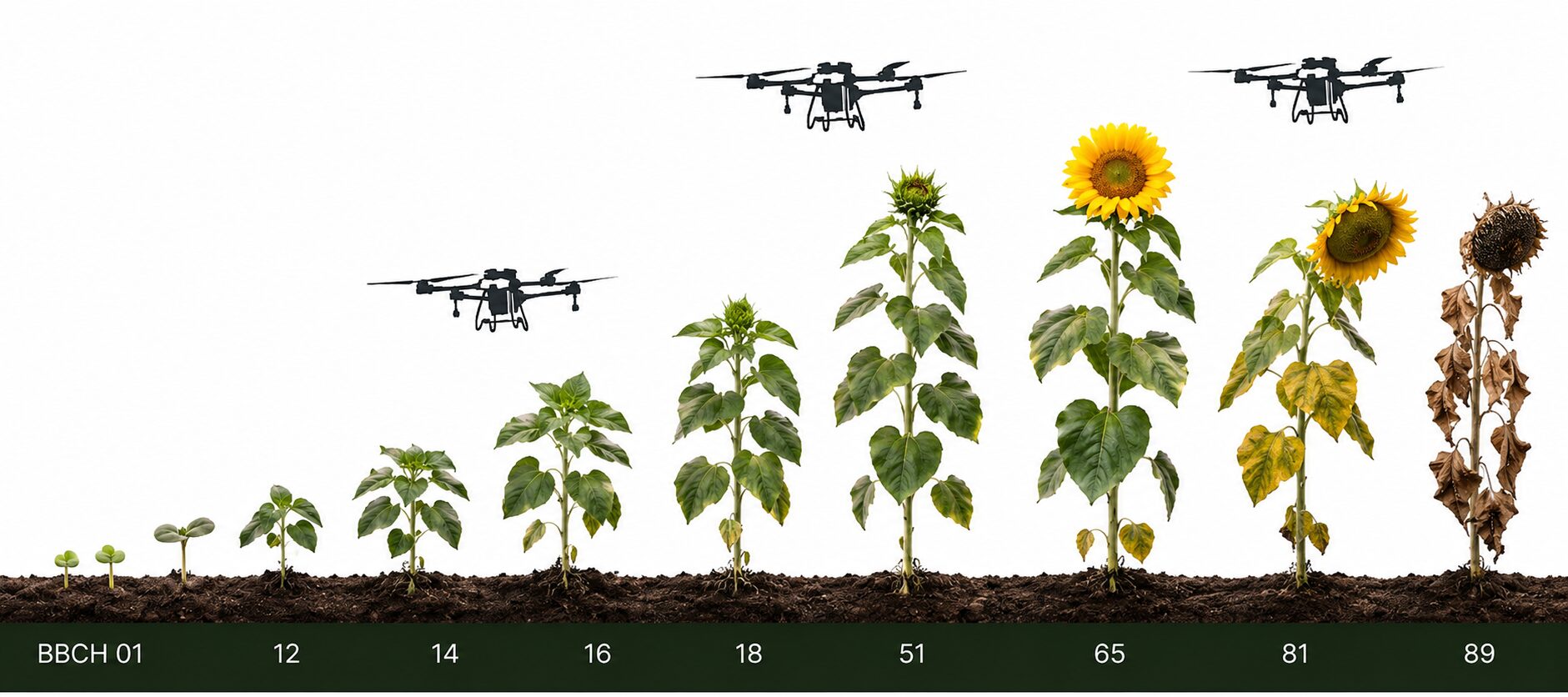
Click a drone above to see the recommended tank-mix and timing details for that spray window.
1. Early Vegetative Stage (BBCH 12–18)
| Growth Stage | Phenology | Treatment Type | Why is it important? |
|---|---|---|---|
| BBCH 12–18 | 2–8 leaf stage (Canopy development) | Post-emergence Herbicide Application | Control of emerging annual and perennial grass (monocot) and broadleaf (dicot) weeds within the crop stand. |
| BBCH 14–18 | 4–8 leaf stage | Insecticide Application | Protection against early foliage pests damaging young plants (e.g., aphids, weevils such as Tanymecus spp.) and prevention of virus transmission by vector insects. |
| BBCH 16–18 | 6–8 leaf stage | Foliar Fertilizer (Boron, Zinc, Manganese, Sulfur, Nitrogen, Amino Acids) |
Boron (B): Microscopic differentiation of flower/head initials begins in this phase; Boron is essential for proper head development. Zinc (Zn) & Manganese (Mn): Key drivers of photosynthesis, auxin synthesis, as well as leaf and root growth. Sulfur (S) & Nitrogen (N): Foundations for rapid protein synthesis and green biomass accumulation prior to stem elongation. Amino acids: Relief of herbicide stress (phytotoxicity) and enhancement of nutrient uptake. |
2. Stem Elongation and Bud Formation (BBCH 30–59)
| Growth Stage | Phenology | Treatment Type | Why is it important? |
|---|---|---|---|
| BBCH 30–39 | Stem elongation and rapid vegetative growth | Foliar Fertilizer (Optional) | Supplying essential nutrients required for intensive stem growth and massive vegetative biomass expansion. |
| BBCH 51–57 | Bud formation – Star-bud stage | Fungicide Application | Critical preventative protection against stem and leaf diseases (e.g., Diaporthe/Phomopsis, Phoma) due to the humid microclimate forming within the closed canopy. |
| Foliar Fertilizer: Boron (B) & Sulfur (S) | Boron (B) is vital for capitulum (head) formation and successful fertilization; Sulfur (S) is essential for oil synthesis and Nitrogen assimilation. | ||
| Bee-Friendly Insecticide Application OR Biological Control (Release of Trichogramma capsules) | Insecticide: Protection against sap-sucking plant bugs (mirids) and aphids feeding on young, tender buds, as well as preventing caterpillar damage at the onset of mass egg-laying by the cotton bollworm (Helicoverpa armigera). Biological Control: Parasitizing eggs of the cotton bollworm (Helicoverpa armigera), preventing larvae from burrowing into the head. Note: Ensure no chemical insecticide treatments are applied within one month following Trichogramma release! |
3. Flowering and Ripening (BBCH 61–89)
| Growth Stage | Phenology | Treatment Type | Why is it important? |
|---|---|---|---|
| BBCH 61–65 | Start of flowering – Full flowering | Fungicide Application (Head Protection) | The most critical application window against head-infecting pathogens (Sclerotinia head rot, Botrytis gray mold). |
| Bee-Friendly Insecticide Application OR Biological Control (2nd release of Trichogramma capsules) | Insecticide: Prevention of caterpillar damage inside the flower head. Always adhere to strict bee-safety regulations when applying chemical treatments! Biological Control: Applied 10–14 days after the 1st release, timed with peak moth flight. Note: Ensure no chemical insecticide treatments are applied within one month following Trichogramma release! |
||
| BBCH 71–79 | Seed formation and achene development | Late Fungicide Application / Head Protection | Prevention of late-season head rots in wet or high-humidity crop seasons. |
| BBCH 81–89 | Ripening (Yellowing to browning of heads) | Desiccation | Ensuring uniform maturity, facilitating mechanical harvesting, optimizing achene moisture content, and halting late-stage rot progression. |
Precise timing always depends on the specific crop year, local conditions, and active pest/pathogen pressure. Always consult a certified agronomist or plant protection specialist prior to executing treatments.
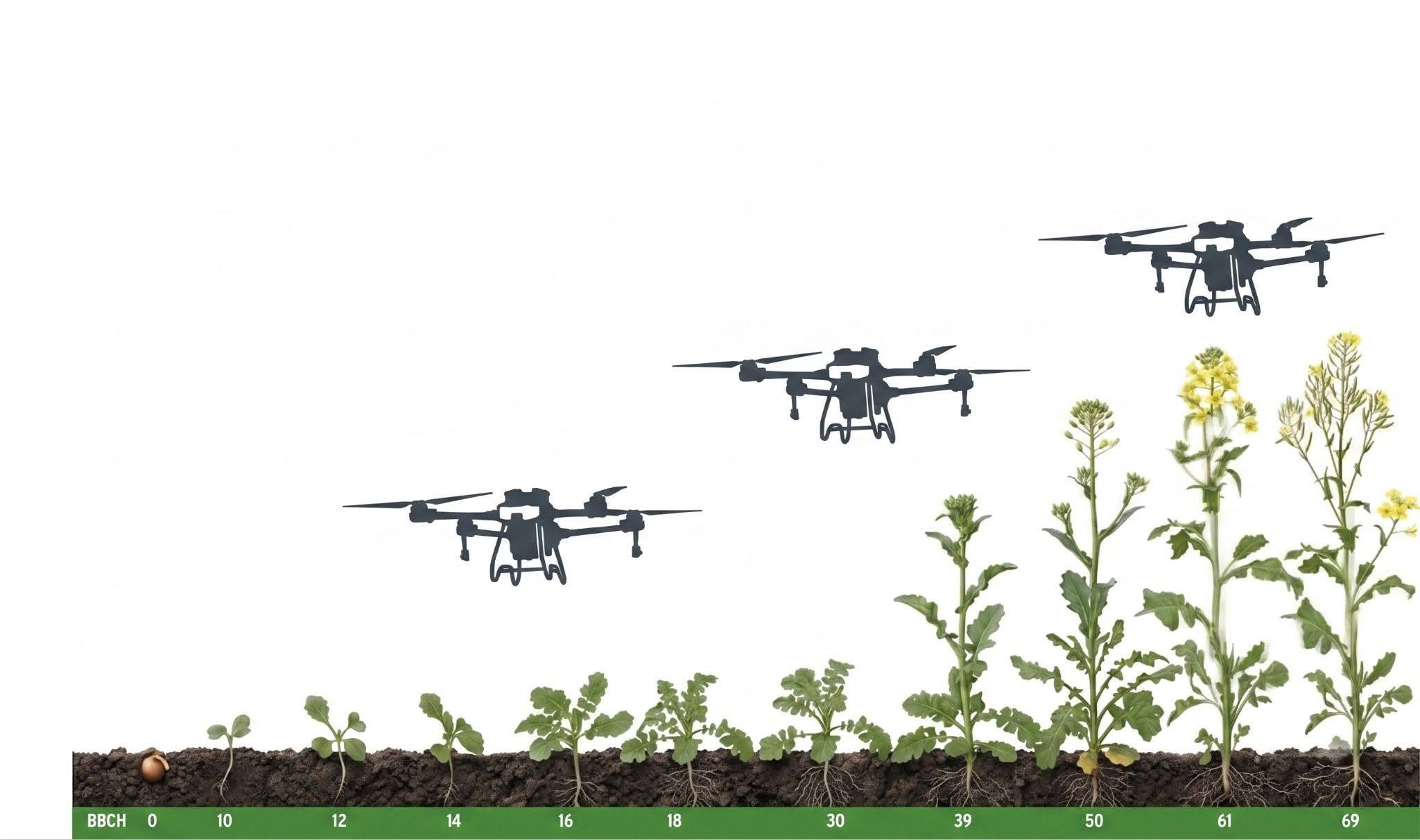
Click a drone above to see the recommended tank-mix and timing details for that spray window.
1. Early Vegetative Stage (BBCH 13–19)
| Growth Stage | Phenology | Treatment Type | Why is it important? |
|---|---|---|---|
| BBCH 13–15 | 3–5 leaf stage | Foliar Fertilizer | Strengthens the root collar and promotes deep taproot development for safe overwintering. Boron (B): Enhances root collar thickening, carbohydrate transport, and deep taproot extension. Manganese (Mn): Boosts photosynthesis and tissue lignification to improve autumn frost hardiness. Zinc (Zn): Stimulates early auxin synthesis for growth and protects cell membranes against cold stress. |
| BBCH 16–19 | 6–9 leaf rosette stage | Fungicide Application | Prevents stem elongation (frost protection / growth regulation) and provides early control against Phoma stem canker and leaf spot. |
2. Spring Vegetative and Stem Elongation Stage (BBCH 30–39)
| Growth Stage | Phenology | Treatment Type | Why is it important? |
|---|---|---|---|
| BBCH 30–32 | Onset of spring growth – stem elongation | Foliar Fertilizer | Regulates shoot growth, stimulates lateral branching, and prevents boron deficiency. Boron (B): Prevents hollow stems and longitudinal cracking during rapid stem elongation. Sulfur (S): Optimizes nitrogen utilization and protein synthesis for vigorous shoot growth. Magnesium (Mg): Boosts chlorophyll production and fuels energy synthesis during rapid canopy expansion. |
| BBCH 35–39 | Intensive stem elongation (until hidden bud stage) | Insecticide Application | Suppresses stem weevil populations to prevent stem splitting and secondary fungal infections. |
3. Reproductive and Ripening Stage (BBCH 51–89)
| Growth Stage | Phenology | Treatment Type | Why is it important? |
|---|---|---|---|
| BBCH 51–57 | Green bud – Yellow bud stage | Insecticide Application + Foliar Fertilizer | Prevents bud feeding damage during the critical pre-flowering window. Boron (B): Improves pollen viability and tube growth to prevent bud abortion and enhance flower retention. Sulfur (S): Supports high oil synthesis and protein formation ahead of bloom. Molybdenum (Mo): Enhances nitrogen metabolism and promotes uniform flower development. |
| BBCH 61–65 | Full flowering (early to mid-flowering) | Fungicide Application | Primary defense against white mold (Sclerotinia stem rot). Drone application completely eliminates trampling damage to the flowering crop canopy. |
| BBCH 73–77 | Pod development – Pod enlargement | Insecticide Application | Prevents pod pest damage and premature opening to safeguard seed yield. |
| BBCH 80–89 | Ripening (waxy ripe – mature pods) | Desiccation + Pod Sealant | Promotes uniform ripening and prevents seed shatter losses from pod splitting. In dense, intertwined crops, drone application reduces seed loss to zero. |
Precise timing always depends on the specific growing season, local soil and weather conditions, and active pest/disease pressure. Always consult a certified agronomist or crop consultant prior to executing specific treatments.
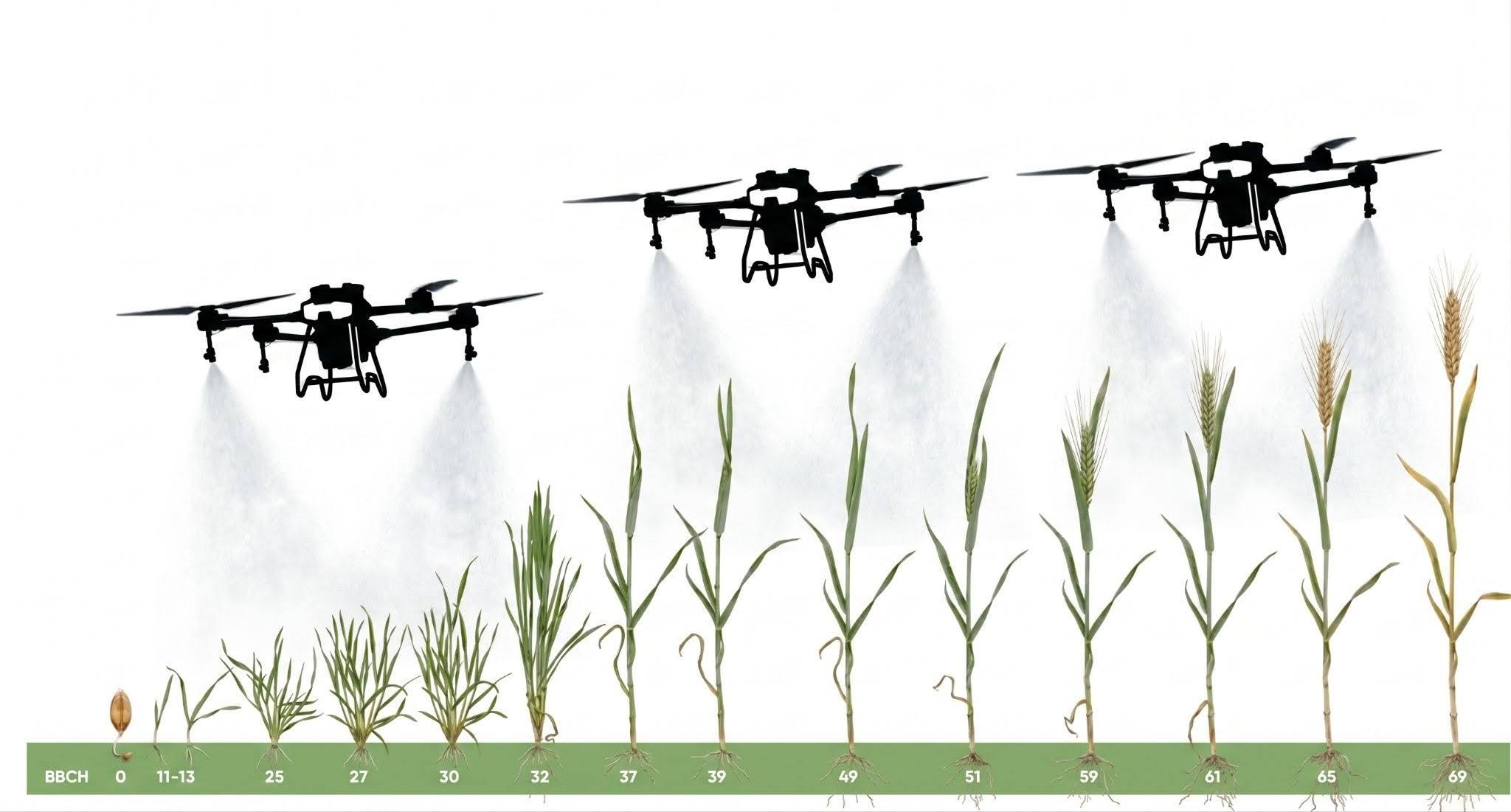
Click a drone above to see the recommended tank-mix and timing details for that spray window.
1. Early Growth Stage (BBCH 13–29)
| Growth Stage | Phenology | Treatment Type | Why is it important? |
|---|---|---|---|
| BBCH 13–25 | Tillering (3-leaf stage to mid-tillering) | Foliar Fertilizer | Stimulates root development and shoot formation without causing ground trampling damage in the field rows. Zinc (Zn): Synthesizes growth hormones (auxins) to drive early root expansion and shoot formation. Manganese (Mn): Powers photosynthesis and activates enzymes that enhance natural disease defense. Copper (Cu): Promotes cell wall lignification to strengthen young stems against early lodging. |
| BBCH 25–29 | End of tillering | Herbicide Application | Weeds deplete water and nutrients prior to intensive growth. Omitting this step can cause a 20–40% yield loss. |
| Foliar Fertilizer | Aids recovery from winter stress and maximizes tiller node counts prior to the spring growth surge. Nitrogen (N): Fuels rapid foliage regeneration and prevents early tiller abortion. Sulfur (S): Works synergistically with nitrogen to kickstart protein synthesis and enzymatic activity. Zinc (Zn): Drives auxin production to boost root vigor and optimize tiller node development. Manganese (Mn): Re-activates photosynthesis and strengthens systemic stress tolerance coming out of dormancy. Amino acids / biostimulants: Provide immediate metabolic energy to bypass cold-soil nutrient blockages and herbicide shock. |
2. Intensive Growth and Stem Elongation Stage (BBCH 31–39)
| Growth Stage | Phenology | Treatment Type | Why is it important? |
|---|---|---|---|
| BBCH 31–32 | 1st–2nd node stage | Fungicide Treatment + Foliar Fertilizer | Early disease protection (powdery mildew, rusts, net blotch) and strengthening of the elongating stems against lodging. Copper (Cu): Critical during stem elongation; deficiency severely weakens stem structural integrity (increasing lodging risk) and leads to pollen sterility later. Magnesium (Mg): Prevents chlorosis on the middle leaves during high-demand vegetative extension. Sulfur (S): Keeps nitrogen metabolism running efficiently to build strong, structural stem tissue. Manganese (Mn): Complements the fungicide application by triggering the plant's internal phytoalexin defenses against early foliar diseases. |
| BBCH 37–39 | Flag leaf emergence | Fungicide Treatment + Foliar Fertilizer | Precision protection of the upper canopy – the primary determinant of crop yield – against foliar diseases. The flag leaf drives 50–70% of grain filling; foliar feeding delivers nutrients directly to it when root uptake declines, combining with mandatory fungicide sprays without extra field passes. Nitrogen (N): Delays flag leaf senescence to extend the active photosynthesis window critical for grain fill. Magnesium (Mg): Maintains high chlorophyll density in the flag leaf to prevent energy burnout under intense radiation. Sulfur (S): Enhances late-stage nitrogen uptake efficiency for uninterrupted canopy metabolism. Boron (B): Supports cell wall strength and ensures reproductive tissue preparation ahead of booting and flowering. Zinc (Zn): Protects upper canopy tissues from oxidative stress during late-spring heat spikes. |
3. Reproductive and Ripening Stage (BBCH 45–89)
| Growth Stage | Phenology | Treatment Type | Why is it important? |
|---|---|---|---|
| BBCH 45–59 | Booting and heading | Insecticide Treatment | Rapid, overhead intervention targeting foliage-damaging pests, avoiding mechanical crop damage. |
| BBCH 61–65 | Flowering (beginning to mid-flowering) | Fungicide Treatment | The critical control window against Fusarium. Top-down aerial drone application ensures direct coverage on the ear. |
| BBCH 73–77 | Milk stage (grain filling) | Insecticide Treatment + Foliar Fertilizer | Protection against aphids and grain-damaging bugs, while enhancing quality parameters (protein and gluten content) for market premiums. Nitrogen (N): Directly fuels protein synthesis in the grain as root uptake capacity declines. Sulfur (S): Works synergistically with nitrogen to form essential amino acids, boosting wet gluten quality and dough elasticity. Zinc (Zn): Enhances carbohydrate translocation into developing kernels and protects tissues from late-season heat stress. Magnesium (Mg): Sustains the "stay-green" effect in the upper leaves to maintain photosynthate flow into the grain. |
Precise timing always depends on the specific growing season, local soil and weather conditions, and active pest/disease pressure. Always consult a certified agronomist or crop consultant prior to executing specific treatments.
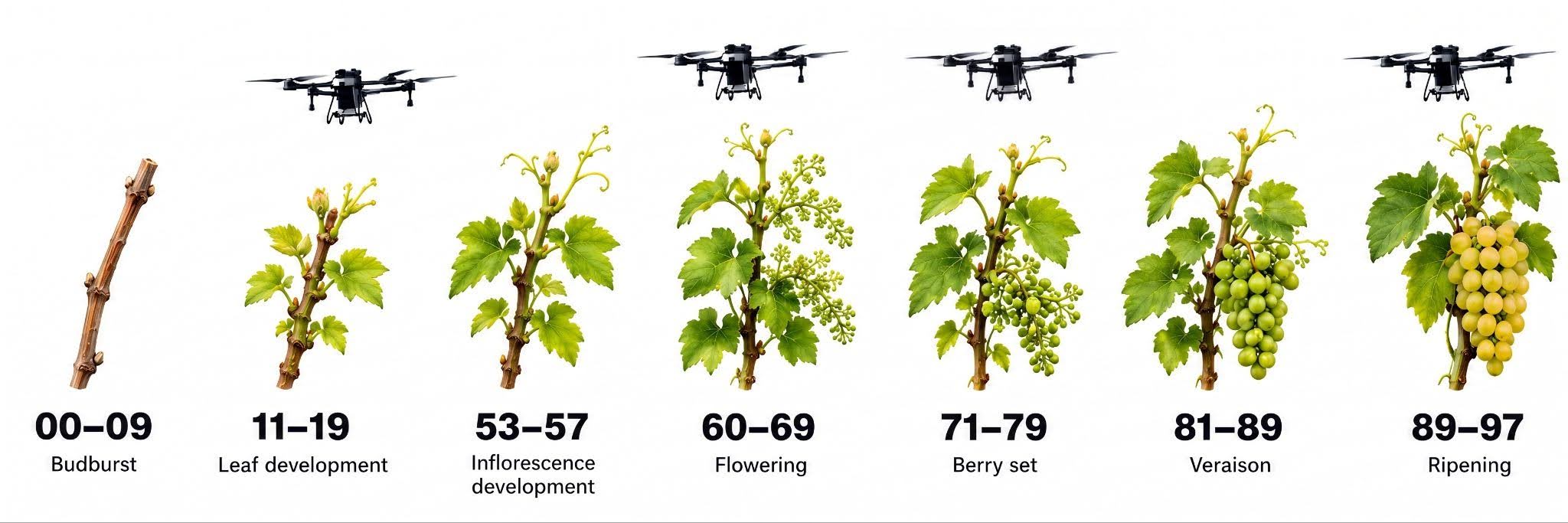
Click a drone above to see the recommended tank-mix and timing details for that spray window.
1. Early Vegetative Growth (BBCH 09–19)
| Growth Stage | Phenology | Treatment Type | Why is it important? |
|---|---|---|---|
| BBCH 09–12 | Budburst to 2–3 leaves | Foliar Fertilization + Biostimulants | Support early shoot and leaf development. Apply Zn, Mn, Mg or Fe only where deficiency is identified. Biostimulants may support stress management, depending on the product. |
| BBCH 13–19 | 3–9 leaves | Fungicide | Preventive protection against powdery mildew and downy mildew according to disease risk and local authorisation. |
| BBCH 13–19 | Active leaf development | Foliar Fertilization | Correct diagnosed Mg, Mn, Fe or Zn deficiencies to support chlorophyll formation, photosynthesis and canopy development. |
2. Pre-flowering and Flowering Stage (BBCH 53–68)
| Growth Stage | Phenology | Treatment Type | Why is it important? |
|---|---|---|---|
| BBCH 53–55 | Inflorescences visible and elongating | Foliar Fertilization + Biostimulants | Assess Boron (B) and Zinc (Zn) before flowering to support normal reproductive development and flower function. Avoid excessive boron application. |
| BBCH 53–59 | Inflorescence development to pre-flowering | Trichogramma Application | Release suitable Trichogramma species against susceptible grape moth eggs where the local pest species, release timing and drone-compatible system support effective biological control. |
| BBCH 53–59 | Inflorescence development to pre-flowering | Fungicide | Establish preventive protection against powdery mildew and downy mildew before susceptible tissues are exposed to infection risk. |
| BBCH 57–61 | Inflorescences separated to beginning of flowering | Foliar Fertilization | Apply B and Zn only where justified by deficiency risk or analysis. Corrective nutrition before flowering may be relevant to reproductive development. |
| BBCH 61–68 | Beginning to end of flowering | Fungicide | Maintain disease protection when justified by infection risk, using products authorised for the crop, stage and drone application. |
| BBCH 61–68 | Flowering | Biostimulants | Consider an authorised foliar biostimulant only where there is a clear agronomic rationale. Avoid unnecessary spraying during sensitive flowering conditions. |
3. Berry Development Stage (BBCH 69–79)
| Growth Stage | Phenology | Treatment Type | Why is it important? |
|---|---|---|---|
| BBCH 69–71 | End of flowering to fruit set | Fungicide | Protect young berries against downy mildew and powdery mildew according to disease pressure and the product label. |
| BBCH 69–73 | Fruit set to early berry growth | Foliar Fertilization | Correct confirmed Mg, Mn, Zn or Fe deficiencies to maintain canopy function and photosynthesis. |
| BBCH 71–75 | Fruit set to pea-sized berries | Trichogramma Application | Target susceptible eggs of relevant grape berry moth species where monitoring and local biological-control recommendations justify release. |
| BBCH 73–77 | Berry growth | Foliar Fertilization | Consider Calcium (Ca) where justified. Calcium is a secondary nutrient, not a trace element; benefits depend on formulation, uptake and timing. |
| BBCH 73–79 | Berry growth to bunch closure | Fungicide | Maintain disease protection as clusters develop, following local disease-risk guidance and product restrictions. |
| BBCH 77–79 | Bunch closure | Fungicide | Where justified, target Botrytis cinerea (grey mould) before berries become tightly packed, especially in susceptible cultivars and humid conditions. |
4. Ripening Stage (BBCH 81–89)
| Growth Stage | Phenology | Treatment Type | Why is it important? |
|---|---|---|---|
| BBCH 81–85 | Beginning of veraison to advanced colour change | Foliar Fertilization | Consider Mg and other nutrients only where a demonstrated need exists. K (potassium) is a major nutrient, not a trace element. Do not assume foliar sprays automatically increase sugar content or colour. |
| BBCH 81–85 | Beginning of veraison | Trichogramma Application | Consider only if a locally relevant later moth generation is susceptible and the release programme supports this timing. |
| BBCH 81–89 | Veraison to ripening | Fungicide | Manage late-season disease risk where necessary, observing the pre-harvest interval (PHI), residue limits and application restrictions. |
| BBCH 85–89 | Advanced ripening to full maturity | Foliar Fertilization + Biostimulants | Apply only where a clear agronomic need exists and the product is permitted before harvest. Avoid unsupported claims about improved sugar content, colour or fruit quality. |
| BBCH 69–89 | Berry development to ripening | Insecticide | Include only when monitoring identifies a relevant pest and an authorised drone-applicable product is justified. Follow resistance-management and pre-harvest requirements. |
Precise timing always depends on the specific growing season, local soil/weather conditions, and active pest/disease pressure. Always consult a certified agronomist or crop consultant prior to executing specific treatments.


